renovation · 9 min read
Bathroom Makeover: Renovate an Old Bathroom or Build New?
Makeover, full renovation or a new bathroom? Learn what each involves, the hidden seepage risk in old bathrooms and how to decide before you spend.
Renovate when a bathroom exists and its tiles, fittings or plumbing are tired; build new when the bathroom does not exist yet, such as a new flat's bare shell or an extension. A cosmetic makeover is only safe when nothing is leaking. An old bathroom may hide seepage, so check under the tiles before you decide what to keep.
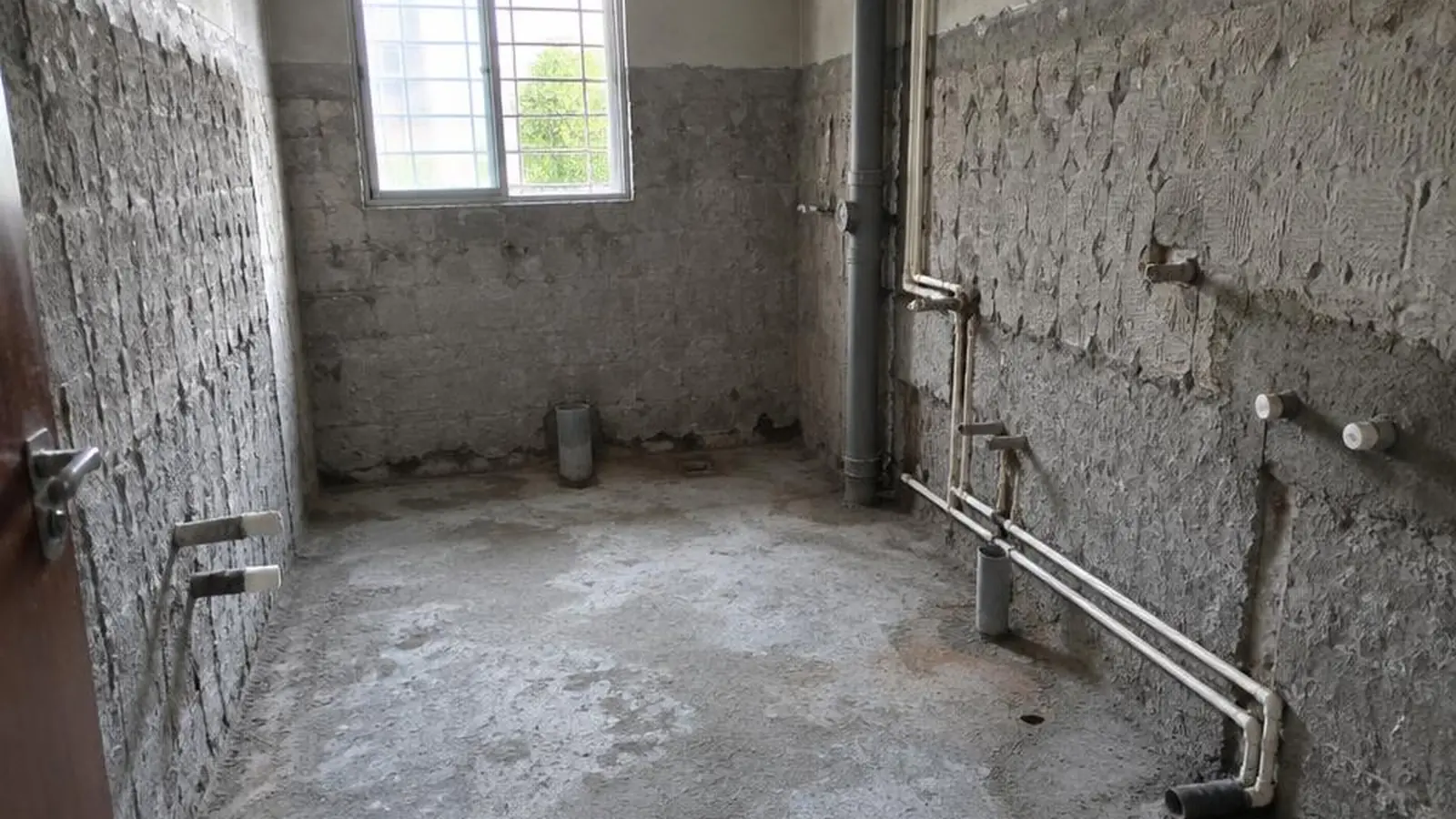
"Makeover", "remodel", "renovation" and "new bathroom" are used loosely, and the loose use leads to mismatched quotes: one contractor prices a surface refresh while another prices a rebuild, and the owner compares the totals. This guide separates them, explains what changes in scope and risk, and gives you a short checklist to decide.
What is the difference between a makeover, a remodel and a full renovation?
There is no legal definition, so ask for the scope in writing. In practice:
| Term | Usually means | Typical work | Main risk |
|---|---|---|---|
| Makeover | A cosmetic refresh | New fittings, paint, mirror, lighting, sometimes new tiles over sound tiles | Covers up a problem instead of fixing it |
| Remodel or remodelling | Changing how the bathroom is arranged or used | Moving the shower, adding a partition, changing storage, sometimes moving the WC | Plumbing and drainage changes |
| Full renovation | Stripping to the structure and rebuilding | Dismantling, plumbing, drainage, waterproofing, tiling, fixtures, finishing | Hidden damage found when opened |
| New bathroom | Building where none exists | Planning supply and drain routes, civil work, waterproofing, tiling, fixtures | Approvals and drainage feasibility |
Many contractors use "makeover" and "remodel" almost interchangeably. The test is not the word but the list of things that will be opened, replaced or moved.
What is involved in renovating an old bathroom?
An old bathroom is taken apart first, and what is found inside decides the plan. A thorough renovation usually runs like this:
- Assessment. Measure the room, look at the plumbing, check the walls and floor for damp, and check the flat below if you can.
- Dismantling and debris removal. Old tiles, fittings and, where needed, the floor bed are removed. In many apartments this has to follow society working hours and debris rules.
- Plumbing and drainage. Pipes are replaced or tested, and drain connections are checked before anything is concealed.
- Waterproofing. A new waterproof layer goes on the cleaned and sloped surface and is tested before tiling.
- Tiling. Floor and walls are tiled with suitable adhesive and grout.
- Fixtures and finishing. WC, basin, shower, taps, vanity, mirror, lighting and ventilation are fitted.
- Quality checks, cleaning and handover.
EzeeTask's bathroom renovation follows this logic with stage checks: plumbing before concealment, waterproofing before tiling, floor slope to the drain, tile and grout, fixtures, and a final snag list.
What is involved in building a new bathroom?
A new bathroom is built from scratch in a new flat, an extension or a bare-shell space. There is no old waterproofing to assess, so planning matters more. The sequence starts with the design and the plumbing layout, not demolition: where the supply comes in, where the drain leaves, where the slope falls and where the fittings sit. Waterproofing is still applied and checked before tiling, and plumbing is tested before it is covered.
Adding a bathroom where none existed is different from fitting out a shell that already has points. It depends on whether there is a workable drain route and water supply, whether the structure allows it, and whether your building or society permits it. In an apartment, a new wet area above another home deserves particular care. Ask for this to be assessed on site before you commit to a design, since it can change the scope considerably.
If you are moving into a new flat, there is a step before any of this. A pre-delivery inspection before possession can reveal defects in the builder's bathroom work before you take possession. See pre-delivery inspection, and for what to look at in a bathroom, read bathroom PDI: drainage and waterproofing checks. Inspecting before interiors go in also keeps evidence visible; our guide on how to inspect your flat before interiors hide the evidence explains why.
What is the hidden-seepage risk in an old bathroom?
The biggest unknown in an old bathroom is whether water has been getting under the tiles. A bathroom can look fine on the surface while the floor slab, the wall behind the tiles or the flat below is damp. Warning signs include:
- damp patches, peeling paint or a musty smell on the wall next to the bathroom;
- a stain or dampness on the ceiling of the flat below;
- white powder on walls near the bathroom, which can indicate moisture moving through masonry (see white powder on walls: efflorescence and moisture);
- hollow-sounding or loose tiles (hollow-sounding tiles in a new flat: what next? explains what that means);
- grout that stays dark or soft however much you clean it;
- a drain that backs up or a floor that never fully dries.
None of these proves a cause by itself. They are reasons to investigate before you spend on finishes. A leak that appears only after showers is the subject of bathroom leaks only after a shower: what it means, and the difference between a leak and general dampness is in what is the difference between seepage, leakage and dampness.
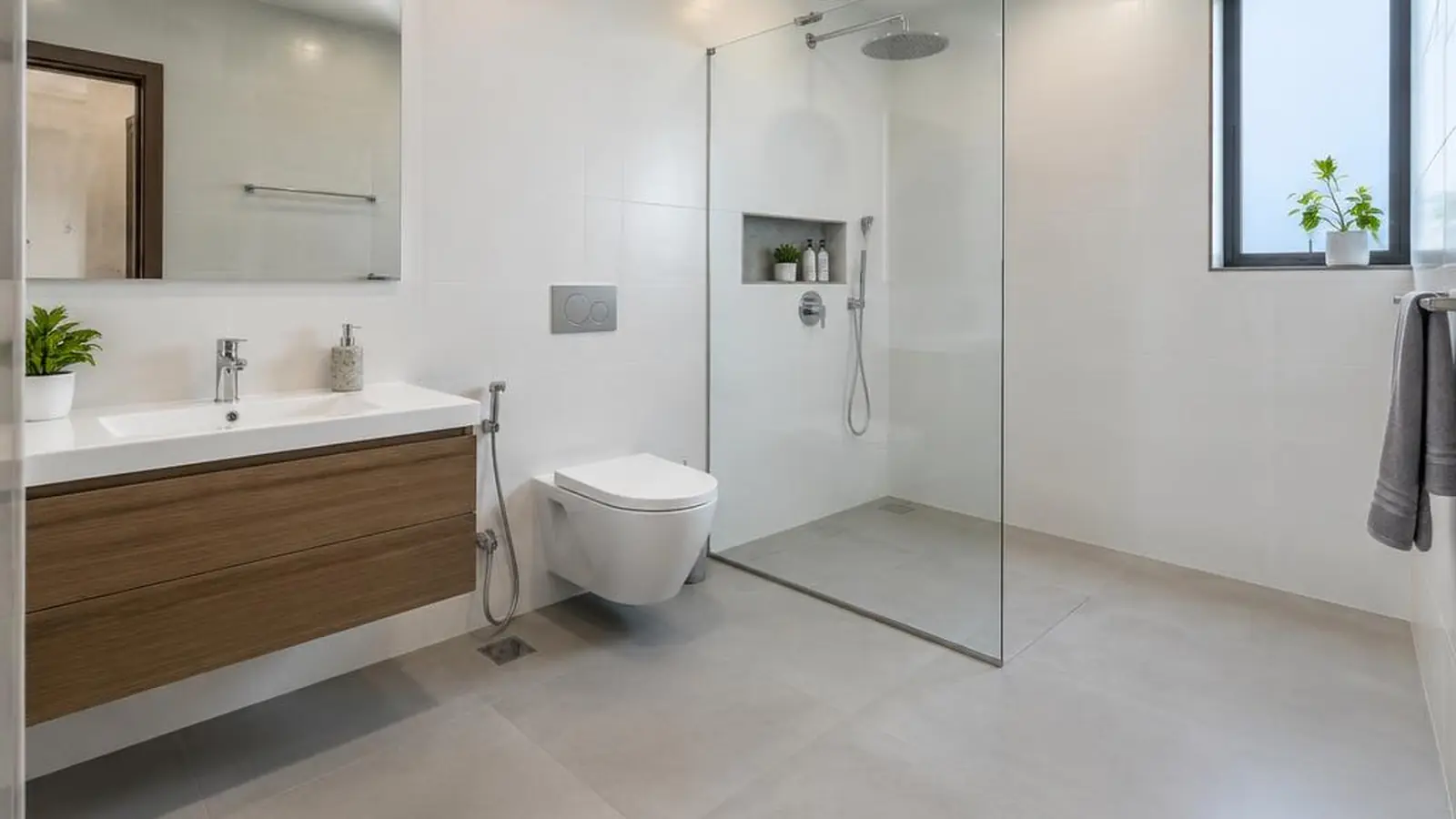
This is why a makeover over old tiles is risky when seepage is possible. New tiles or paint cover the surface but do not renew the waterproof layer underneath, and they hide the signs that would have told you something was wrong. EzeeTask's site assessment checks for hidden seepage first, and then advises whether the old surface can stay or must be removed. The recommendation is written into the proposal. For the technical side, read bathroom waterproofing before tiling.
What changes in cost, and what stays the same?
There is no single answer to "is it cheaper to renovate or build new?", because the work is different, not just the amount.
| Factor | Renovating an old bathroom | Building a new bathroom |
|---|---|---|
| Dismantling and debris removal | Needed | Often not needed in a bare shell |
| Plumbing and drainage | Assess, replace or test; changes if you move fixtures | Planned from the start; new runs and a drain route to confirm |
| Waterproofing | Existing layer assessed; new layer applied after stripping | Applied once, checked before tiling |
| Unknowns | Hidden damage behind tiles | Approvals, drainage feasibility, structure |
| Tiling and fixtures | Same range of choices | Same range of choices |
What stays the same is the finish list. Tiles, WC, basin, shower, taps and vanity cost the same whichever route you take. What changes is the work around them.
EzeeTask's packages for a standard bathroom, with material and labour, are Essential at ₹99,999, Premium at ₹1,49,999 and Luxury at ₹1,99,999, with Custom for your own design. Larger bathrooms, layout changes and imported fittings are quoted separately, itemised, and the scope, including whether the work is a renovation or a new build, is confirmed after the site assessment. For a breakdown of what drives these numbers, read bathroom renovation cost in India: Delhi NCR guide.
A short checklist to decide
Answer these honestly, and the right route usually appears.
| If this is true | Lean towards |
|---|---|
| The bathroom is dry, tiles are sound, you want fresher fittings and paint | A cosmetic makeover, after a leak check |
| There is damp on the adjoining wall, a stain below or hollow tiles | A full renovation, after finding the source |
| You want to move the WC, shower or drain | A remodel with plumbing and drainage changes, quoted separately |
| The flat is new and you have not taken possession | Inspect first, then build or fit out |
| There is no bathroom at the location today | A new bathroom, assessed for drain and approvals |
| You plan to sell soon and the bathroom looks dated | A makeover, but only after confirming there is no seepage |
If you are still unsure, the bathroom renovation service page covers both new bathrooms and renovating an old one. The site assessment is where the decision gets settled, because someone looks at your actual bathroom.
Questions about makeover, renovation and new bathrooms
Is it cheaper to renovate or build new?
It depends on the work, not the label. A new bathroom in a shell skips demolition but may need drain and supply work, and an old bathroom needs dismantling and may hide damage. Compare itemised quotes with the same scope before deciding.
Can I add a bathroom to an existing flat?
Sometimes. It needs a workable drain route and water supply, a structure that allows the openings, and permission from your building or society. Get it assessed on site, since the answer changes the cost and the design.
Do I need a pre-delivery inspection before building in a new flat?
It is a sensible step before possession and before interiors go in, because defects in the builder's bathroom work are easier to raise before you take over. EzeeTask does pre-delivery inspection as a separate service, and waterproofing is still checked before tiling in any bathroom EzeeTask builds.
Do the same packages apply to both?
The packages are for a standard bathroom. Whether you are renovating or building new, the scope is confirmed after the site assessment, and larger bathrooms, layout changes and imported fittings are quoted separately in an itemised quotation.
Last reviewed: 21 November 2026. Package prices are EzeeTask's and are confirmed in the approved proposal.