seepage · 7 min read
Bathroom leaks only after a shower: what it means
A bathroom leak after a shower needs more than a timing guess. Record useful clues, separate possible routes and discuss safe professional checks.
A bathroom leak after a shower suggests a connection with use, but the timing alone cannot identify the faulty part. A professional may need to check the water supply, drainage, splashes and the waterproof layer beneath the bathroom finish. Record what happens during normal use, then ask a qualified professional to separate the possible routes before choosing a repair.
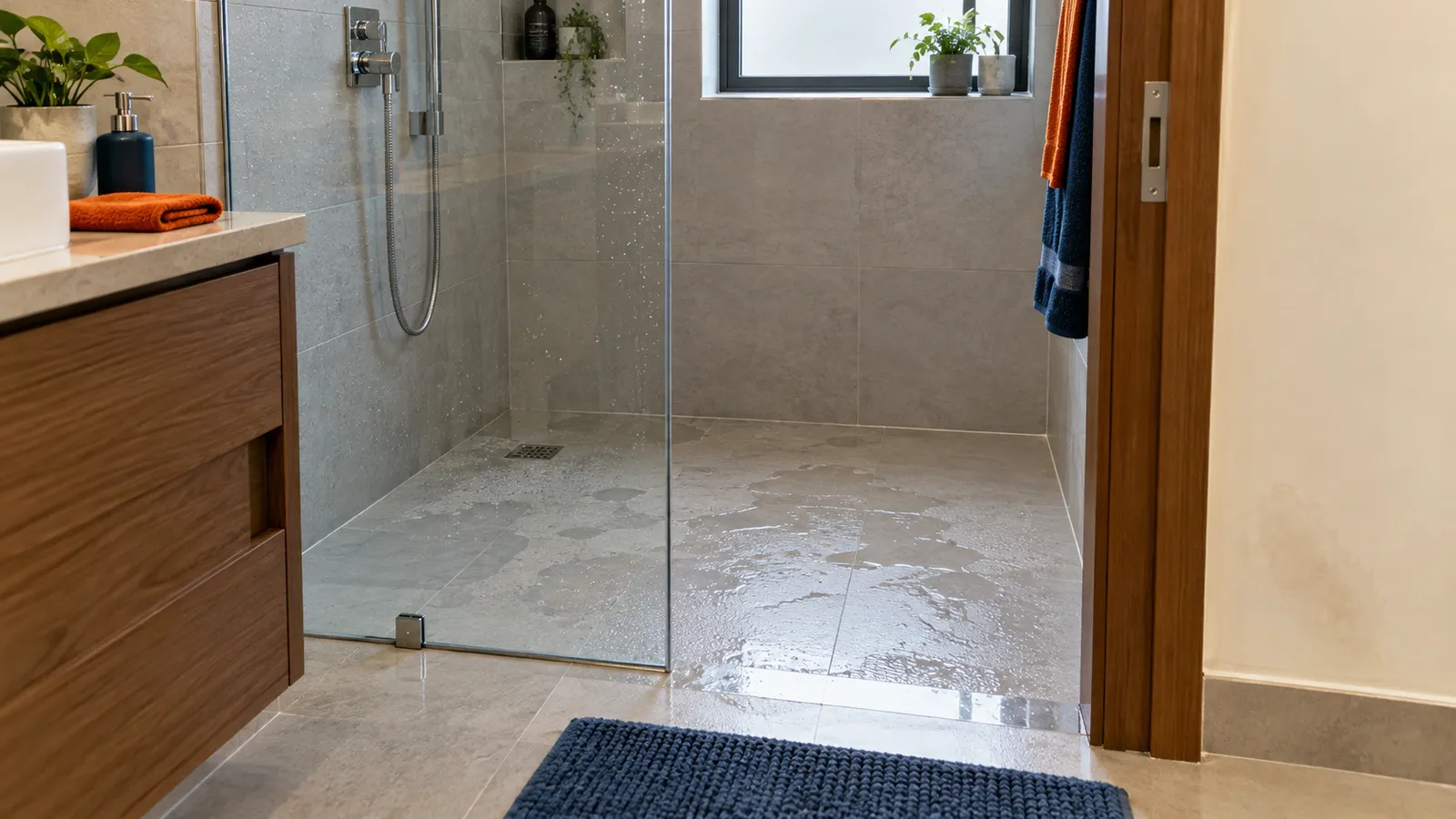
Why can the ceiling look dry between showers?
A leak may start and stop. The stain may appear some time after water enters. Material beneath a tiled surface can hold moisture. Schluter's tiled shower explanation describes how water can enter the layers below tile in the systems it discusses. A professional should therefore consider the layers beneath the finish, while checking how your bathroom was built.
By "dry between showers", you may mean that you see no drips. That does not confirm that the material is dry. Record which you mean. A stain that stays the same colour is different from a new wet edge, and a ceiling that was painted recently may be harder to compare with older photographs.
In an occupied Delhi NCR flat, the shower may share a wet area with a basin, toilet, washing machine or floor drain. Record which fixtures you know someone used. Do not label each event "shower leak" when cleaning or another fixture could have contributed.
Which observations help separate the possibilities?
Discuss these observations with the professional investigating the leak. Several faults can coexist, so you cannot confirm a cause from any row or use the table as a home diagnostic test.
| Observation during ordinary use | Route worth asking about | Why it is not conclusive |
|---|---|---|
| Change noticed after showering | Drainage, wet surfaces, fittings or supply | Several parts are used together |
| Visible water at an exposed fitting | The fitting and its connection | It may not explain the separate ceiling patch |
| Water leaves the shower area | Enclosure, threshold or surface drainage | Concealed waterproofing remains unknown |
| Patch changes when the room was reportedly unused | Other plumbing, stored moisture or another route | The use history may be incomplete |
| Similar change after rain | External or shared building route | Shower use and rain may overlap |
Note whether the concern is in the bathroom, an adjoining bedroom or the flat below. A rough room sketch with the shower and affected surface marked helps avoid misunderstandings. If another household is involved, ask them to make their own dated observations rather than guessing their water use.
What belongs in a shower-use diary?
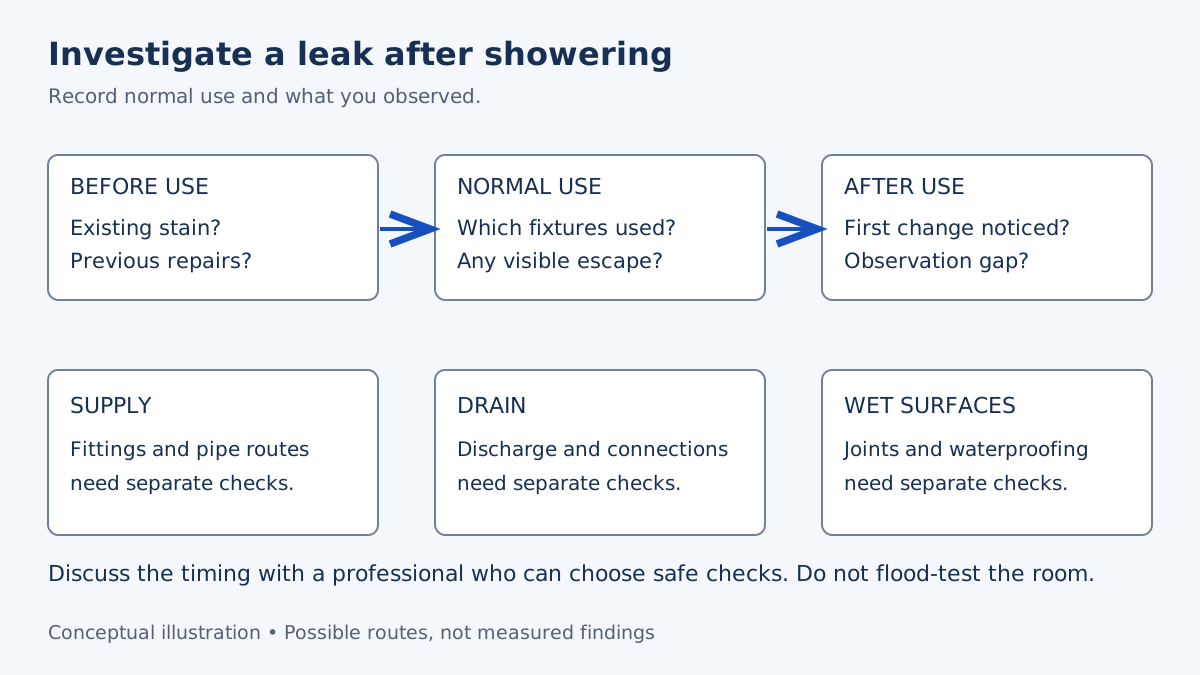
For each event, record the date and approximate period of normal use. Note which fixtures you know someone used and when you first noticed a visible change. Add a photograph from the same location and note any rain or recent repair.
Use descriptions such as "new drip noticed later that morning" instead of assigning an exact delay you did not observe. If you left the flat for several hours, say so. The professional needs to know about this gap before connecting the stain with a particular activity.
Also note changes that could affect comparisons: the shower was not used, the room was cleaned, sealant was added or a drain was serviced. Do not extend shower use to produce a bigger leak. If normal use is causing damage, ask the responsible professional about limiting use while you arrange an assessment.
Can fresh grout solve the problem?
A visible joint may need repair. Grout, the material between tiles, should not be treated as the whole waterproof barrier. Schluter's wetroom specification guide distinguishes tile and grout from the waterproofing beneath them. Its product details and UK standards apply to that context. The general distinction is between the exposed finish and the layers that control water beneath it.
Ask a contractor what evidence points to the proposed repair location. If they recommend regrouting, ask what that work is expected to address and what it will leave unchecked. If the concern is at a drain connection or concealed pipe, a surface treatment may not address that route.
A neat silicone line does not prove that the joints and openings through the finish are sound. Avoid removing sealant, lifting tiles or probing joints before the inspection unless a professional has agreed to the work and recorded the starting condition. Altering several things at once makes the next observation harder to interpret.
What should a professional check separately?
Ask the professional to investigate in stages and explain the question each check will answer. The exact order depends on access, the installation and the risk of further damage. It need not begin with opening the entire floor.
- Compare the history and visible condition with the bathroom layout and previous work.
- Identify whether an exposed fitting or concealed supply route needs a plumbing investigation.
- Ask how the professional will check the drain, its connections and where it discharges, separate from water reaching the surrounding floor.
- Review the shower boundary, joints between the wall and floor, openings through the finish and relevant waterproofing details.
- Ask the professional to record which explanations the checks support, which symptoms they could not reproduce and any access or specialist checks they still need.
Use these points to discuss the inspection. Leave pressure and flood tests to professionals. Agree any controlled water test as a separate step, including permissions, who will monitor the affected property and when they will stop. A generic online test duration or pressure is not a specification for an existing apartment bathroom.
How do you decide whether the repair worked?
Ask the repair provider to link their work to the suspected or confirmed route and state how it will be checked. Keep dates and photographs before work, after work and during the agreed follow-up. Record any change in the symptom. One dry observation cannot prove that all hidden layers are sound.
The EPA moisture-control guide explains that moisture management includes limiting unwanted wetting and enabling drying. Ask the professional when they can restore the finishes; do not use the absence of fresh paint damage as the only acceptance check.
Access affects the repair choice. Our guide to whether seepage can be fixed without breaking walls explains why opening a surface is sometimes necessary. Ask the professional to base that decision on the evidence. A promise to repair any leak without disturbing the finish is not enough.
Questions before a repair
Does a leak after every shower prove failed waterproofing?
The repeated timing is worth investigating, but it cannot prove failed waterproofing. Supply and drain components may operate during the same activity.
Should I block the drain to find the leak?
Do not conduct an improvised flood test in an occupied flat. The professional should decide whether a water test is appropriate and how they will protect adjoining areas.
Which service should I ask about?
Describe the timing and access when discussing bathroom leakage. If the cause is uncertain, request the scope of a seepage and leak assessment before accepting a repair proposal.
Related reading
Sources and further reading
- Schluter: The Practical Guide to Wetroom Specification, copyright 2019: finish versus waterproofing distinction; UK product guidance.
- Schluter: Tiled Shower Waterproofing Systems: moisture beneath tiled finishes in the described shower assemblies.
- US EPA: Moisture Control Guidance, December 2013: wetting and drying principles, not a bathroom-specific testing protocol.