home inspection · 7 min read
Bathroom PDI: drainage and waterproofing checks
Check bathroom drainage and visible leakage before handover. Learn what PDI records and why concealed waterproofing needs separate evidence.
A bathroom pre-delivery inspection (PDI) should record how water drains during normal use, visible leaks and the places where the floor meets the walls. The inspector should also check the door threshold, the edge at the doorway, and list anything they could not inspect. Water reaching a drain shows how it flows during that check. It does not prove that the membrane, or waterproof layer beneath the tiles, is sound.
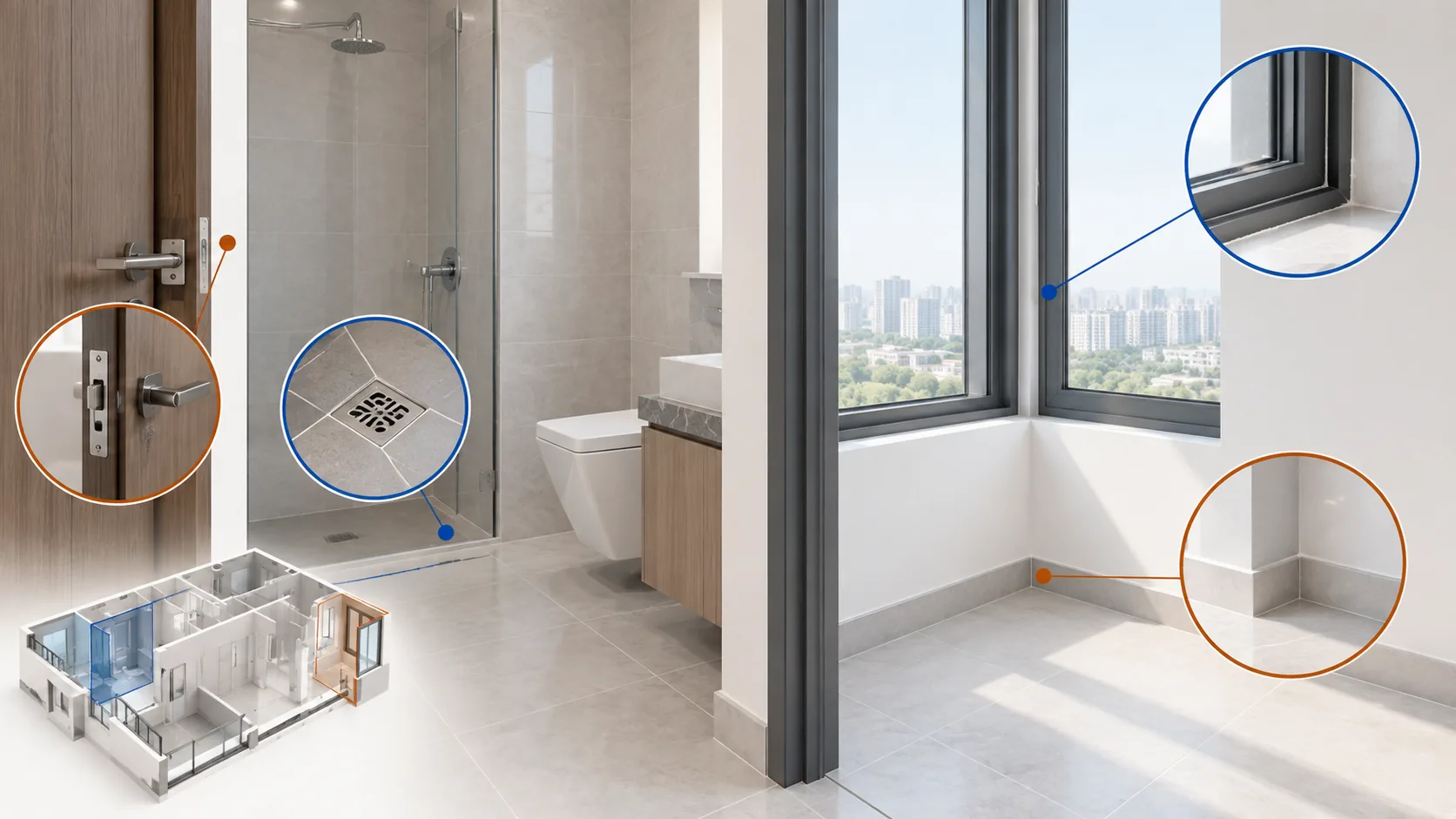
For a Delhi NCR apartment approaching handover, record the bathroom before vanity units, glass partitions or interior finishes restrict access. Agree which fixtures may be operated and arrange water availability with the builder. Keep the bathroom findings alongside the whole-flat possession checklist, so you can review them with the rest of the flat. One satisfactory bathroom check cannot establish the condition of the whole flat.
What should the inspector look at before running water?
Photograph the bathroom before anyone runs water. Record existing stains, wet grout and water on the floor so the inspector can distinguish them from water used during the visit.
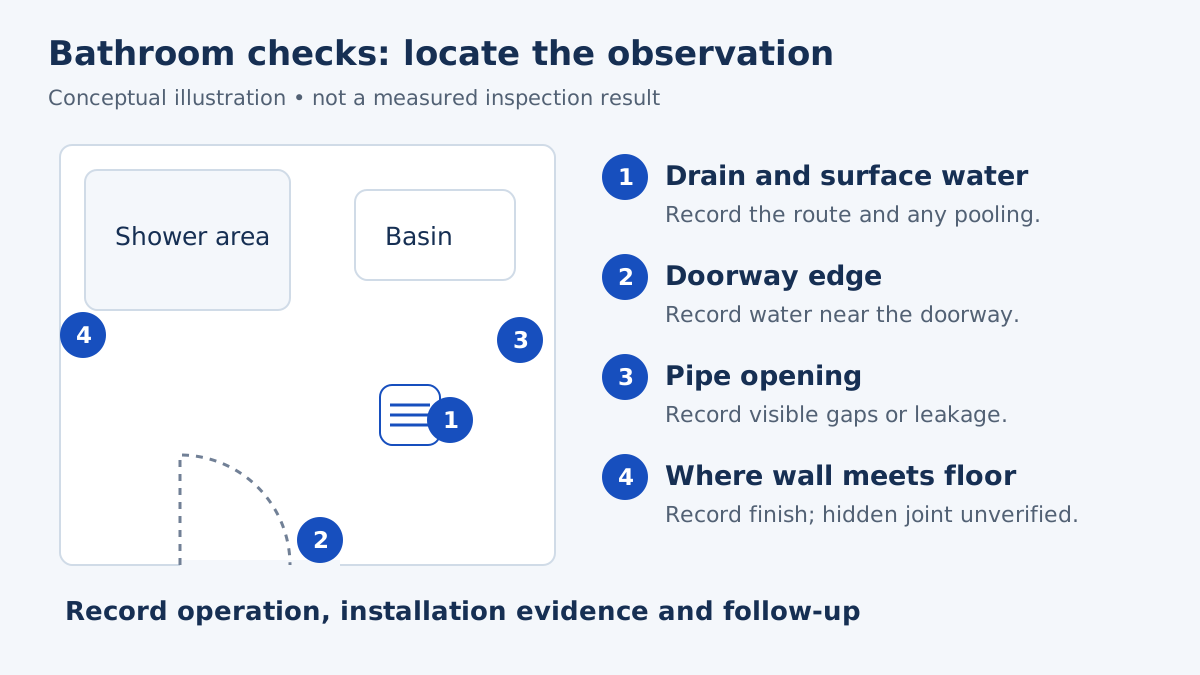
Ask the inspector to identify the shower area, floor drain, basin waste, toilet connections, door threshold and accessible service openings. Record missing fittings, unfinished joints and areas covered by protective material. Mark a covered corner as unverified, even if the rest of the room looks complete.
Agree which of these observations the visit will cover. This checklist does not define an Ezeetask package or the requirements for accepting construction work.
| Location | Useful record | What it cannot establish alone |
|---|---|---|
| Floor and drain | Drain position, visible debris and where water remains | Concealed pipe condition or membrane continuity |
| Basin and accessible waste | Visible drips during ordinary operation | Condition of inaccessible joints |
| Shower junctions | Gaps, damaged finish or incomplete sealing | The waterproofing detail behind the finish |
| Toilet connections | Visible leakage or an unstable fitting | Hidden pipe alignment |
| Door threshold | Water approaching or crossing the doorway | A universal threshold-height requirement |
| Adjacent wall | Existing staining and whether it changes | The source or age of the moisture |
What does pooling tell you?
If water stays pooled in one spot, record it and ask for the cause to be investigated. Pooling alone does not explain the cause. The report should distinguish water trapped away from the drain, water backing up at the drain and droplets left on a textured tile.
During agreed normal use, the professional can record where water flows and where it remains after use stops. Note which fixture they used, when they made the observation and whether they could see a blockage at the drain. Keep the timing with each photograph: a picture taken as use stops may show something different from one taken later.
Do not invent a universal acceptable puddle size, drainage time or floor slope from an online checklist. Ask the inspector to assess the installed layout, finish and drain arrangement against the relevant project specification. If they take measurements, ask which method and specification they used. A level reading needs that context to show whether the floor slopes towards the drain as intended.
InterNACHI's inspection standard separates functional drainage from shower-pan leakage testing. This is an international inspection-scope reference, not Indian law or a promise that every check is included in your visit.
Why can good-looking tiles hide an unresolved waterproofing question?
Tiles cover the surface; the waterproofing beneath them needs its own evidence. Sika's waterproofing guidance explains that even sealed grout can allow water through at tile interfaces. A clean grout line cannot show that the layers below are watertight.
As a specific system example, the SikaCeram Sealing Membrane W data sheet describes waterproofing beneath tiles and how to seal corners, drains, places where pipes pass through, and joints between parts. The finished tiles hide that work. They do not show that this product was installed in your bathroom or that its instructions apply to another system.
Ask the builder for the installed waterproofing product and system details, work-stage photographs and any recorded test method and result. Check that the records identify your bathroom and the stage of work. A product brochure describes how the product is meant to be used; it cannot show whether the builder installed it correctly in your flat.
When does further testing need a separate plan?
Normal use may not answer a question about hidden waterproofing. A competent professional should decide whether further testing suits the installed system and its condition. Before testing, agree permission, the method, access and who is responsible for any neighbouring space the test could affect.
Do not plug a drain and flood a finished bathroom yourself. Do not treat an online manufacturer's test duration as a universal instruction. The builder or specialist needs to establish product suitability, curing requirements and how the test will be monitored and stopped if leakage occurs.
In an apartment tower, the inspector may need separate access to the ceiling below or a shared service shaft. Record the limitation if they cannot get that access. "No leak seen from this bathroom" is narrower than "the bathroom is waterproof." Where there is already a damp patch or a reported leak, the bathroom leakage guide helps frame the source-investigation question.
What should a useful bathroom snag say?
A snag is an issue recorded for follow-up. Give its location, describe what the inspector saw and state the next step you want. For example: "Main bathroom, beside doorway: water remained in this area after the agreed shower operation; builder to assess drainage and report the proposed correction." This is an illustrative entry, not a customer finding.
Keep each issue open until the builder addresses the recorded concern. A photograph of fresh grout cannot show whether the builder corrected a drainage problem. Ask what changed, whether the original condition was checked again and what remains inaccessible. Record those answers before new cabinetry or finishes obscure the area.
What else do buyers ask?
Can a dry bathroom pass waterproofing inspection?
A dry bathroom can be visually inspected. Without relevant records or agreed testing, concealed waterproofing remains unverified. A dry surface on one visit is not a performance guarantee.
Should I ask for every tile to be removed?
No. Begin with the specific observation and available installation records. Any opening-up should follow a professional investigation plan, with permission and reinstatement agreed.
What if water is unavailable on the day?
Record visible condition and list the operational checks not performed. Arrange a follow-up scope rather than marking untested drainage satisfactory.
For an upcoming handover, discuss pre-delivery inspection with the bathroom count, readiness of fittings and access limitations. Agree what the inspector will cover before the visit.
Related reading
- New-flat plumbing: flow and drainage checks at PDI
- PDI without water or electricity: what stays unchecked?
Sources and further reading
- InterNACHI: residential inspection standard; functional drainage and inspection exclusions; not Indian regulation.
- Sika India: Sealing Membrane W data sheet, March 2023; one under-tile waterproofing system and its junction details.
- Sika US: tile and stone waterproofing; why surface grout is not the whole waterproofing assembly.