home inspection · 6 min read
New-flat plumbing: flow and drainage checks at PDI
Plan new-flat plumbing checks with clear flow, drainage and leak observations. Understand supply conditions, concealed-pipe limits and follow-up at PDI.
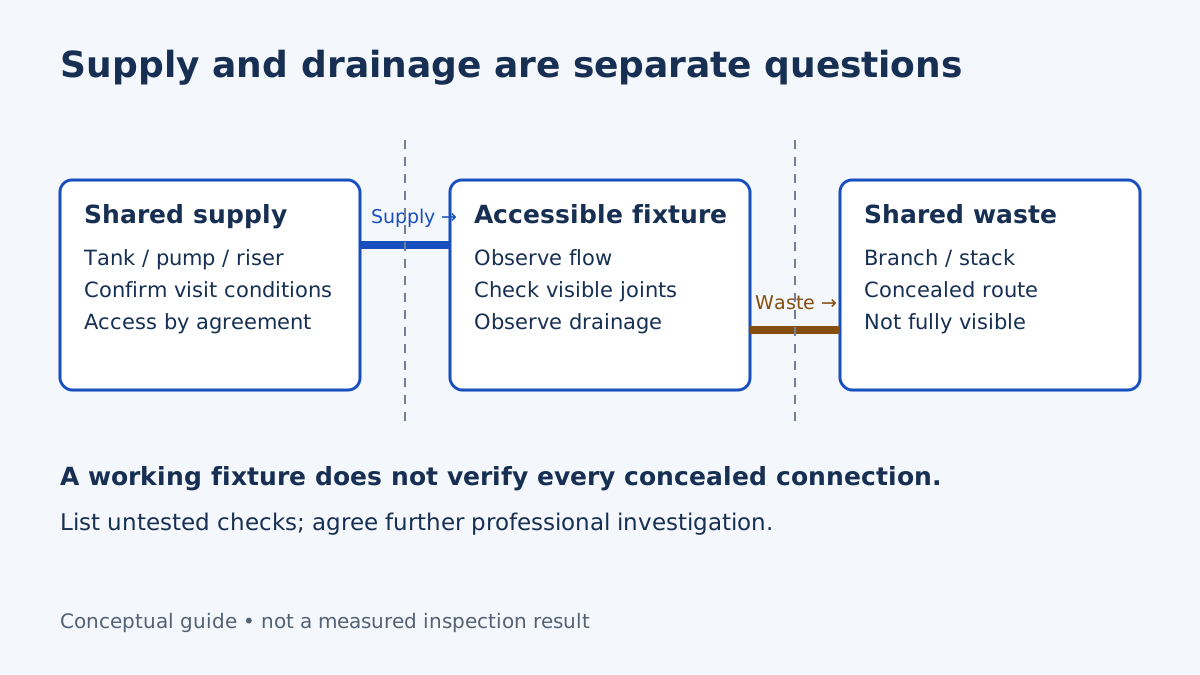
At a new-flat PDI, ask the inspector to check how accessible fixtures supply and drain water under the conditions available that day. The report should describe each fixture checked, any visible leaks and the items they could not test. Water from one tap cannot verify the plumbing throughout the flat. A brief drain check cannot prove that concealed waterproofing is sound.
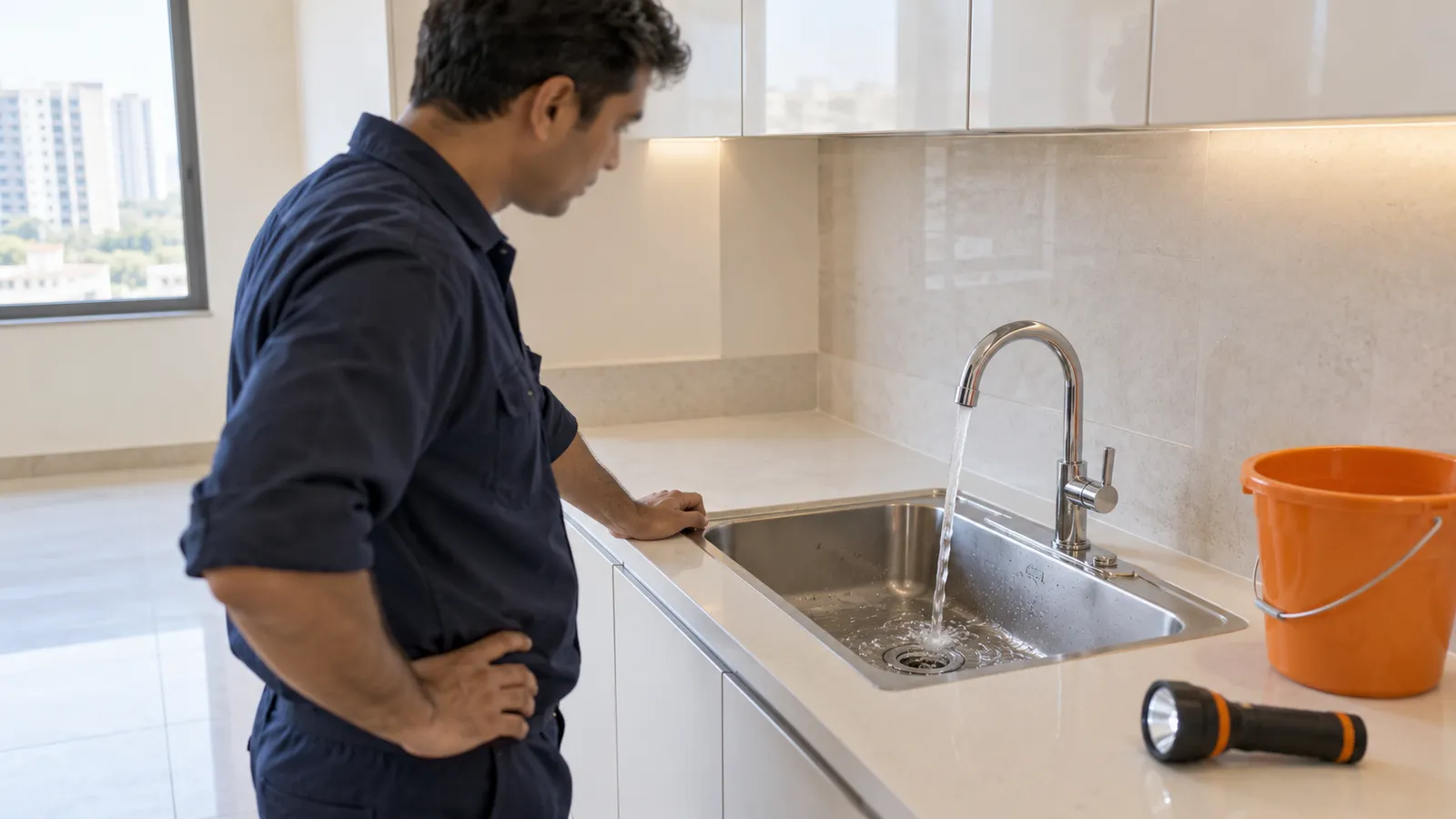
Why do supply conditions matter at handover?
Your flat's fittings are only part of the apartment building's water system. Ask the builder or facilities team which supply will be available and whether normal building operation has begun. Have the inspector record any reported pump, tank or service interruption. Weak flow during an interruption does not establish that a tap is defective.
Arrange access before cabinetry, stored materials or unfinished work obstruct the sink and bathroom fittings. If the inspector needs to check a shared shaft, arrange authorised, safe access. Do not enter a service shaft or remove covers yourself to make the visit appear complete.
Bring the builder's fixture schedule and mark anything not yet installed. Ask the inspector to distinguish an absent shower fitting, capped connection or disconnected water heater from an installed fixture they tested that did not work.
Is water flow the same as water pressure?
Flow is the amount of water delivered over time. Pressure is the force driving it. Cambridge Water explains this difference between pressure and flow. Its local service targets are for its own UK customers and should not be used as Delhi NCR acceptance limits.
Ask whether the PDI provider will observe flow or take a measurement. For a measurement, have them record the units, location, method and conditions. An entry saying "pressure good" without these details is not a pressure-test result.
The suitable operating range depends on the installed system and fixture requirements. A professional should compare measured conditions with the relevant design and manufacturer information. Do not adjust communal pumps, valves or pressure controls based on a blog checklist.
Why look at more than one fixture?
By comparing fixtures, a plumber can investigate whether a problem affects one outlet or extends further. Where appropriate, they can assess performance during agreed simultaneous use. Ask whether their observations suggest a local restriction, a branch issue or a wider supply concern. You cannot diagnose the cause from that pattern alone.
Ask the inspector to distinguish bathroom basin, shower, kitchen sink and toilet observations. Ask them to name any checks they could not complete. For fixtures with hot and cold connections, the report should say which were operational. Turning on a cold tap cannot establish whether an unfinished hot-water system works.
EPA's home maintenance guidance notes that deposits can restrict faucet flow and that visible connections below sinks are useful places to look for leakage. A plumber can consider these possibilities and observation points when checking your flat. They still need to investigate the cause.
What should drainage observations include?
Ask the professional to name the fixture, record the water-use conditions and describe what happened. They might observe steady drainage, slow emptying, backup or a leak, or be unable to complete the check. They need supporting investigation before attributing "slow drainage" to "wrong pipe slope".
| Observation | Useful next question | Limit to retain |
|---|---|---|
| Basin empties slowly | Was the issue repeated and assessed by the plumber? | Observation alone does not identify the obstruction or layout |
| Water appears below a sink | Which accessible connection or area became wet? | A wet patch alone may not locate the exact source |
| Floor retains water during an agreed check | Where did water remain and what method was used? | This is not proof about the whole waterproofing layer |
| Several fixtures behave poorly | Has the building team checked the shared system? | Similar symptoms do not prove one common cause |
| No water during the visit | When can an operational check be completed? | No performance conclusion is available |
Do not block drains or flood a bathroom to test it yourself. Controlled water tests, if needed, require an agreed professional method and permission that accounts for neighbouring flats. Stop use and alert the responsible team if water is escaping into another area.
What remains hidden after a functional check?
A working basin does not let the inspector see every concealed joint or verify all pipe routes and the full shared stack. A short visit cannot reproduce every condition you may encounter while living in the flat. Ask the inspector to list what they could access and the concealed plumbing they could not examine.
ASHI's inspection standard distinguishes plumbing inspection from water-quality determination, pressure and flow measurement, and filling fixtures to test for leaks. The standard is US professional guidance. It does not define Indian requirements or Ezeetask's service scope.
Arrange an appropriate assessment if you need to establish water quality. Clear-looking water and satisfactory flow do not prove it is safe to drink. A wall that stays dry during the visit may still have an intermittent leak.
How do you turn the findings into repairs?
Give each observation a room and fixture label. Keep the initial photo, builder response, proposed correction and verification status together. Ask who needs to act: the flat's plumbing contractor, fixture supplier or building facilities team. Keep concerns about shared systems distinct from cosmetic snags so the responsible team can follow them up.
After a repair, ask the professional to check the original concern again under suitable conditions. A photo of new sealant may show that someone did work. It cannot demonstrate that they resolved the earlier drainage or concealed-leak concern. If dampness is the main symptom, the bathroom leakage guide explains the need to investigate its source.
Frequently asked questions
Can plumbing be passed without water?
The inspector cannot report an operational result without the conditions needed for that check. They can record visible condition where safe and list the tests they could not complete.
Does a drain test prove waterproofing?
A drain test checks drainage performance. It does not prove that waterproofing works. Agree any further professional investigation with the provider.
What should I arrange before the visit?
Confirm supply, installed fixtures, safe access and the builder representative's availability. Use the whole-flat handover checklist for the wider visit and the PDI service page to discuss the actual scope.
Related reading
- Bathroom PDI: drainage and waterproofing checks
- PDI without water or electricity: what stays unchecked?
Sources and further reading
- Cambridge Water: pressure FAQs, for the flow/pressure distinction.
- US EPA: home maintenance, for visible leakage and fixture maintenance observations.
- ASHI: Standard of Practice, for examples of inspection boundaries. Overseas thresholds and rules are not adopted here as Indian requirements.