home inspection · 7 min read
PDI without water or electricity: what stays unchecked?
PDI without water or electricity leaves checks unfinished. Record the limits, judge whether a partial visit helps and arrange the remaining tests.
A pre-delivery inspection (PDI) without water or electricity can still record accessible finishes, fittings and visible concerns, but it cannot complete checks that depend on the missing supply. Ask the inspector to mark those checks "not tested" and record the reason and follow-up needed. Decide whether a limited visit is worth doing now or whether rescheduling would better answer your questions.
Is a limited visit still worth doing?
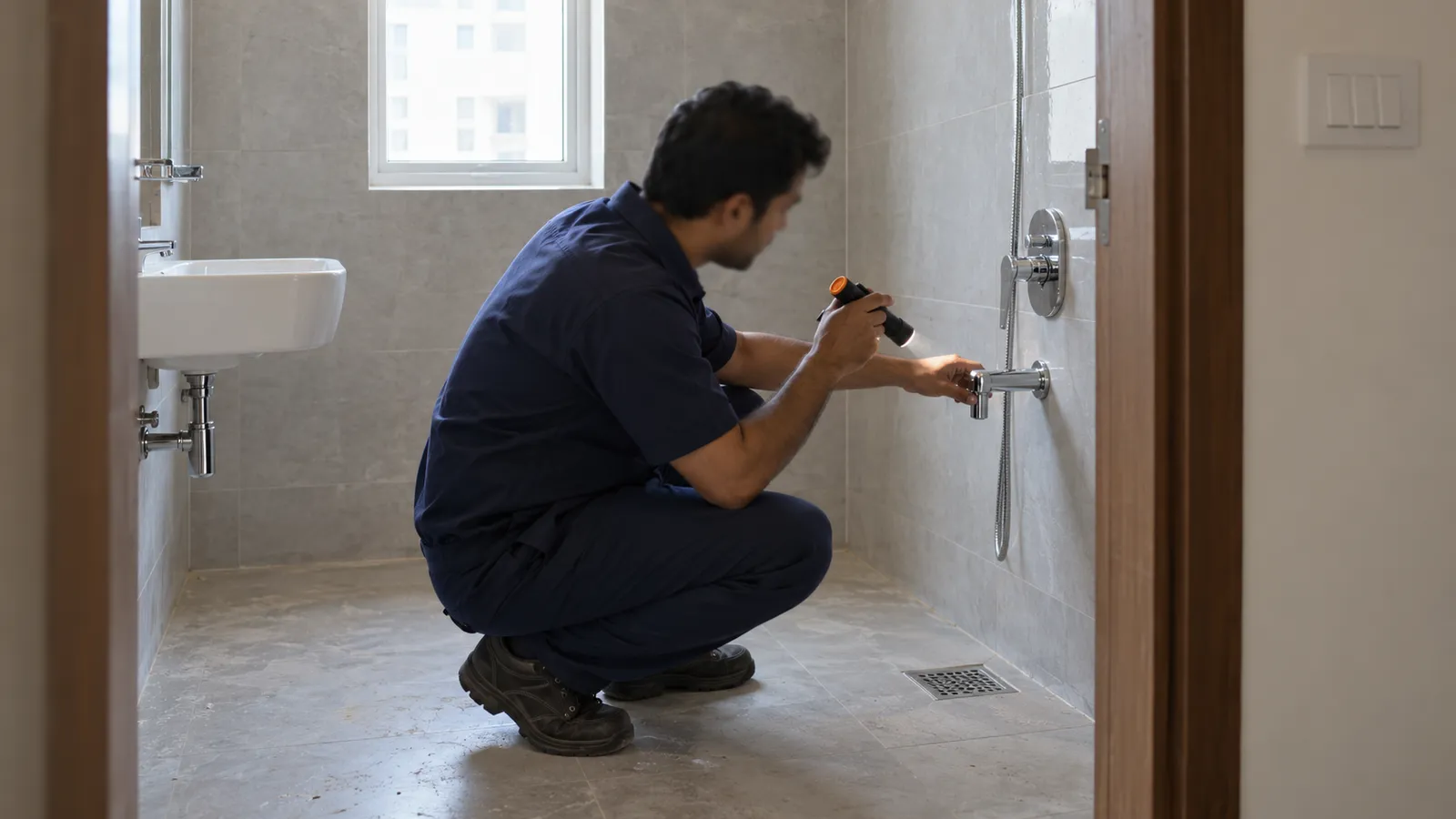
Ask which areas the inspector can access and what you need from the visit. You may still want to record visible conditions before interior work starts, provided you agree and document the visit's limits. If your main concern is plumbing operation and water will be unavailable throughout, the visit will leave that question open.
Discuss the reduced scope before the team travels. Ask whether the price, report and later visit arrangements change. Do not assume a second visit is included. In a Delhi NCR tower, coordinate the site representative, flat access and utility readiness together; confirmation at the security gate does not confirm supplies inside the flat.
InterNACHI's inspection guidance recommends agreeing scope before inspection. Agree whether to proceed with documented limits or reschedule. You could also arrange a first visit now and agree what a follow-up will cover.
Which checks can proceed, and which remain open?
The following is a planning aid, not a promised package. Confirm what the inspector can do, given the available light, safe access and stage of completion.
| Area | What may still be observed | What missing supply can leave unresolved |
|---|---|---|
| Walls and floors | Accessible visible cracks, chips, stains and unfinished areas | Whether a stain changes during plumbing use |
| Doors and windows | Safe manual opening, closing and visible condition | Powered accessories where fitted |
| Taps and sanitary fittings | Visible installation, damage and accessible connections | Flow, flushing, drainage during use and leaks under those conditions |
| Electrical points | Accessible external condition and labels | Energised functional checks and measurements |
| Water heater or powered equipment | Visible presence and accessible installation details | Operation requiring water, power or both |
| Concealed or locked areas | Location and reason access was unavailable | Condition behind the obstruction or locked door |
The InterNACHI standards PDF, effective June 2013, describes plumbing observations involving running water and flushing, and excludes a requirement to operate shut-down systems. It supports the distinction between observation and operation. It is not an Indian apartment-inspection standard or a specification for your visit.
How should the report describe an incomplete check?
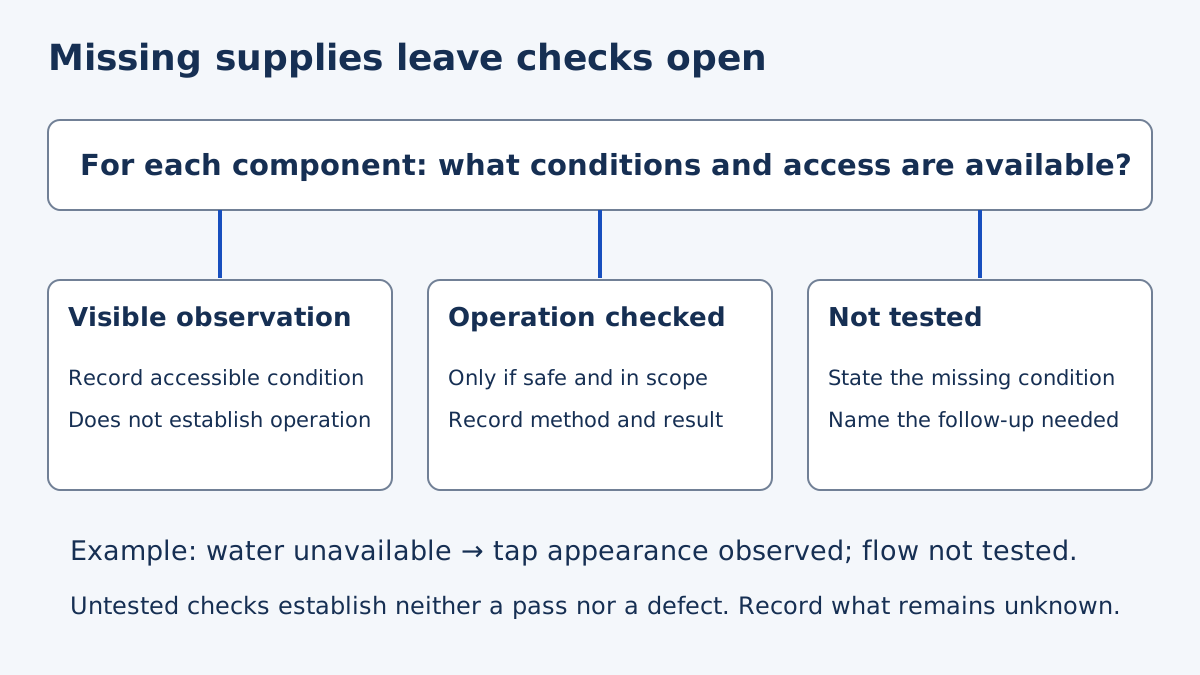
Ask for item-level wording rather than a single disclaimer at the end. "Water unavailable" should be connected to the taps, flushes or other checks affected. If supply returns halfway through the visit, ask the inspector to record which checks they then performed and which remain open.
Ask the inspector to use clear statuses:
- "Observed" means the inspector recorded the visible condition. They may not have assessed operation.
- "Tested" means the inspector performed the stated check and recorded its conditions and result.
- "Not tested" means the check did not take place. The inspector should give the reason.
- "Further assessment needed" means you need another method, professional or access arrangement to answer the question.
A "tested" entry covers the stated check; it does not approve the whole system. A "not tested" entry leaves a question unanswered and does not confirm a defect. This separation helps you decide whether to arrange access, ask for a repair or request specialist assessment.
Consider this hypothetical entry: "Kitchen sink tap: external condition observed; running-water and drainage checks not performed because water supply was unavailable." From that entry, you can see what the inspector observed and which checks still need doing. It gives neither a pass nor a failure for the unavailable checks.
Can temporary arrangements substitute for utilities?
Discuss any alternatives only with the inspector and authorised site team. A working light on a temporary extension does not establish the condition of the flat's circuits. Water poured into one accessible drain does not establish normal supply pressure or the behaviour of every fixture.
Do not energise incomplete wiring, remove electrical covers, reconnect supplies or improvise pressure tests to make the visit appear complete. Ask the responsible team to restore and confirm safe supplies. If a professional uses an agreed limited method, ask them to describe it and its limits in the report. You should be able to tell whether they checked normal operation.
RICS makes a similar distinction in its Level Three survey scope: inspectors examine services they can see and observe normal operation where safe and authorised. Specialist testing remains separate. That UK service is a reference for describing boundaries, not a package offered here.
What should the follow-up visit cover?
Write a short list of the unresolved checks for the follow-up visit. Name each room and component, the missing condition and the question to answer. Ask who confirms readiness and when that confirmation will reach the inspector.
Before a later visit, confirm:
- Water and electricity are available inside the flat for the required checks.
- The affected fittings are installed and ready for safe operation.
- Locked or obstructed locations can now be accessed.
- The inspector has the original report and the list of unfinished checks.
- The fee and extent of the return visit are agreed.
- New findings and completed checks will retain clear dates.
Confirm whether the return visit covers only unfinished checks or a full repeat inspection. Repairs or interior works between visits may create a separate need for reassessment. Record those changes instead of assuming the original visual observations remain current everywhere.
Use the inspection report guide to discuss how findings and limitations will be presented. A report sample demonstrates organisation; it cannot establish what was tested in your flat.
What can the owner decide now?
Ask for a clear summary of completed and outstanding work before making your next project decision. Keep handover paperwork and contractual questions separate from the inspection result; a limited report cannot determine what you should sign.
For ordinary booking logistics, see how to prepare for PDI. If supplies are uncertain, raise that before arranging pre-delivery inspection, so you and the inspector can agree which questions the visit can answer.
Frequently asked questions
Can a dry bathroom pass its plumbing checks?
A dry appearance alone cannot establish how plumbing performs during use. Record the visible condition and the unavailable operational checks separately.
Does restoring power complete the electrical inspection?
No. It creates a condition needed for some checks. The appropriate professional still needs to perform the agreed checks safely and document the results.
Is an unfinished inspection useless?
Not necessarily. Dated observations may help with visible issues, provided the report makes the unanswered questions clear and you plan how to resolve them.
Related reading
- New-flat plumbing: flow and drainage checks at PDI
- Electrical checks at PDI: scope and safety limits
Sources and further reading
- InterNACHI: buyer and seller inspection guidance.
- InterNACHI: general inspection standards, June 2013 PDF.
- RICS: Level Three scope of inspection.
These sources explain inspection boundaries; they do not set Indian legal requirements or confirm Ezeetask inclusions.