home inspection · 6 min read
Electrical checks at PDI: scope and safety limits
Understand electrical checks at new-flat PDI, socket-tester limits, missing power and the evidence to request before an electrician closes a finding.
At a new-flat PDI, ask the inspector to record the accessible electrical points, visible defects, available power and results of the agreed professional checks. These checks do not certify the whole installation as safe. A working light or a socket tester showing no fault cannot establish whether concealed wiring, earthing and protective devices are adequate.

What should you agree before the handover visit?
Ask the provider to put the electrical scope in writing. Which rooms and points will they check? Will they use instruments or inspect visible condition? Confirm who will do the work and how the report will list checks they cannot complete. Ask whether they will cover every accessible point or take a sample; the report should make this clear.
For a Delhi NCR apartment, ask the builder or facilities team which power supply will be available: permanent supply, backup power or a temporary construction connection. Have the inspector record it. Arrange access to the rooms they need to check; locked bedrooms and interior work can prevent them from completing the visit.
Bring the builder's electrical layout and list of promised fittings. The inspector can use them to identify a missing appliance point or a point in the wrong location. The layout alone cannot establish whether the installed circuit suits the appliance you intend to buy.
Which observations make an electrical finding useful?
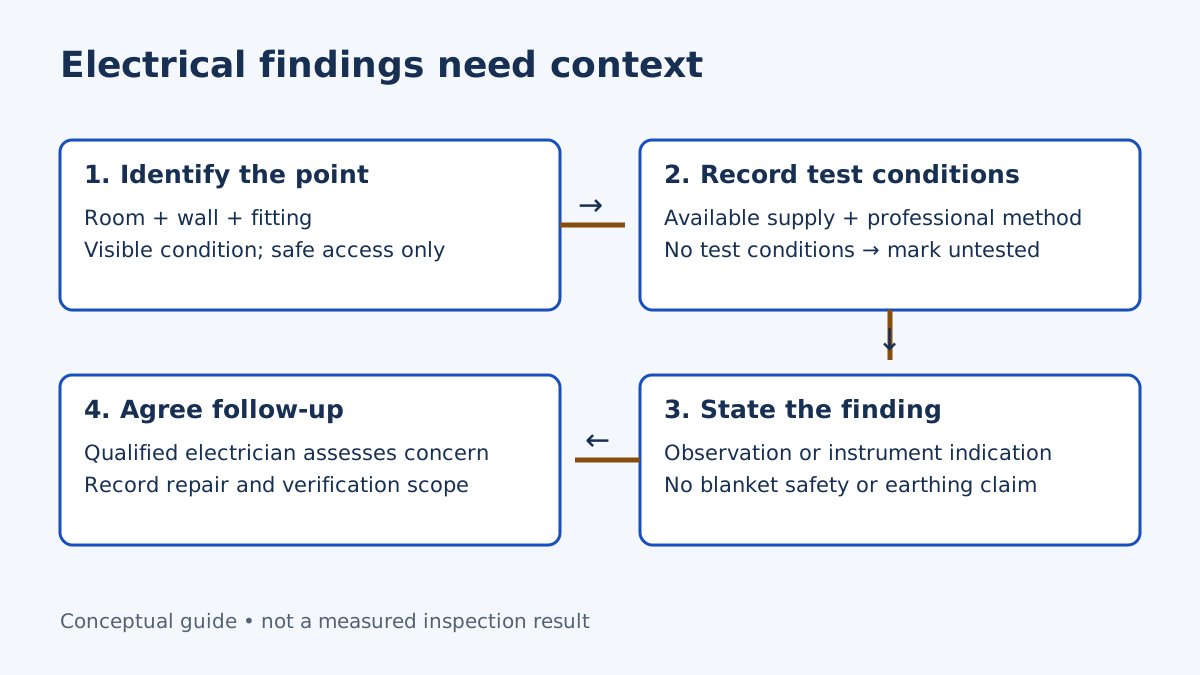
An entry such as "electrical work incomplete" gives the repair team little to work with. Ask the inspector to name the location, describe the problem and record the next action, with a photograph where safe. The report should distinguish visible condition from electrical performance.
| Item to record | Useful evidence | What it does not establish |
|---|---|---|
| Socket or switch face | Room, wall and visible damage or missing cover | Condition of concealed terminations |
| Lighting point | Installed fitting and observed response during agreed check | Capacity for a future appliance |
| Closed distribution board | Visible exterior condition and readable labels | Correctness of all circuits behind the cover |
| Instrument indication | Point, device/method and result recorded by the professional | Whole-installation safety |
| Unavailable point | Reason: inaccessible, unfinished or no supply | A pass or a confirmed fault |
Use the home inspection report guide to discuss how locations, limitations and follow-up actions will appear in your own report. The electrician needs enough detail to find the exact point again.
What can a socket tester tell you?
A socket tester can indicate certain wiring conditions within its design limits. A simple tester cannot measure the effectiveness of protective earthing and can miss dangerous faults. More capable instruments still require competent interpretation. Electrical Safety First explains these distinctions in its guide to plug-in socket testers.
The guide covers UK equipment and wiring practice. Here it supports the limits of the instruments; it does not set Indian compliance requirements. Ask the professional to consider device compatibility, the installation and the test method. To interpret a photograph of indicator lights, they need the tester model, the point tested and an explanation of the result.
Treat "no fault indicated by this check" as a limited observation. It does not mean "earthing certified" or "flat electrically safe". If you need answers about protective earthing, circuit suitability or protection against electric shock, ask the electrician what further assessment they need to carry out.
What belongs with a qualified electrician?
Leave electrical investigation, opening enclosures, assessment of protective measures and wiring repairs to a qualified electrician using appropriate procedures. Do not attempt live testing from this article. As a homeowner, do not remove socket plates, open a distribution board, insert probes, bypass protection or keep resetting a tripping circuit to complete a checklist.
If you see sparking, exposed wiring or water near electrical equipment, or notice a burning smell, keep away and notify the responsible professional or building team without delay. Do not touch the equipment to check whether it is hot. Smoke or fire requires an emergency response rather than continuing the inspection.
For the broader distinction between a handover observation and a specialist assessment, read the electrical safety audit overview. Confirm who will provide that assessment and what it covers. A PDI booking does not include a full electrical audit unless the provider has agreed to it.
What if permanent power is unavailable?
The inspector can still record point locations and visible condition where safe. They should mark checks that need power as untested and explain why. A blank result leaves you guessing whether they checked the point.
Ask the builder for a date when the required supply and access will be available, then agree the follow-up scope and charges with the inspection provider. If the inspector used a temporary supply, keep that detail with the result. Do not assume it represents performance under the flat's final arrangement.
ASHI's inspection standard distinguishes inspected items from items not inspected and their reasons. You can use this distinction when discussing your report. It does not establish that Ezeetask follows the US standard or provides every check it lists.
How should you close a reported electrical snag?
Keep the original finding alongside the builder's response. Record who says they completed the repair, when they did it and what evidence you have to close the finding. A replaced faceplate may resolve a visible crack; it does not by itself answer an earlier wiring concern.
Before interiors cover points or new appliances are connected, ask which unresolved items need the electrician's assessment. If another trade later changes the wiring, the PDI record describes the condition before those changes. Save both records.
Frequently asked questions
Does a working socket mean its earthing is safe?
No. Operation and a simple tester indication do not establish protective earthing effectiveness. Ask a qualified electrician to assess the relevant concern.
Is an untested point a defect?
An untested point means the inspector lacks a result; it does not establish a defect. Ask them to record why they could not test it and what they need to complete the check.
What should I send before booking?
Share the flat layout, handover stage, known concerns, supply availability and access restrictions. The pre-delivery inspection page is the starting point for agreeing a suitable visit.
Related reading
- Home inspection vs structural audit: which do you need?
- PDI without water or electricity: what stays unchecked?
Sources and further reading
- Electrical Safety First: plug-in socket tester limitations.
- ASHI: Standard of Practice, for scope and reporting distinctions.
- ASHI: What is a home inspection?, for an overview of condition reporting. These overseas resources do not establish Indian legal requirements or Ezeetask's package inclusions.