home inspection · 7 min read
Hollow-sounding tiles in a new flat: what next?
Hollow-sounding tiles need evidence before replacement. Learn what to record, what to ask the builder and how to verify the follow-up.
If a tile in your new flat sounds hollow, record its location and ask for an assessment. Sound alone does not prove that a tile is loose, unsafe or due for replacement. Note whether there is also cracking, movement, lifting or damaged grout, then ask for an assessment based on the layers beneath the tiles and the project specification.
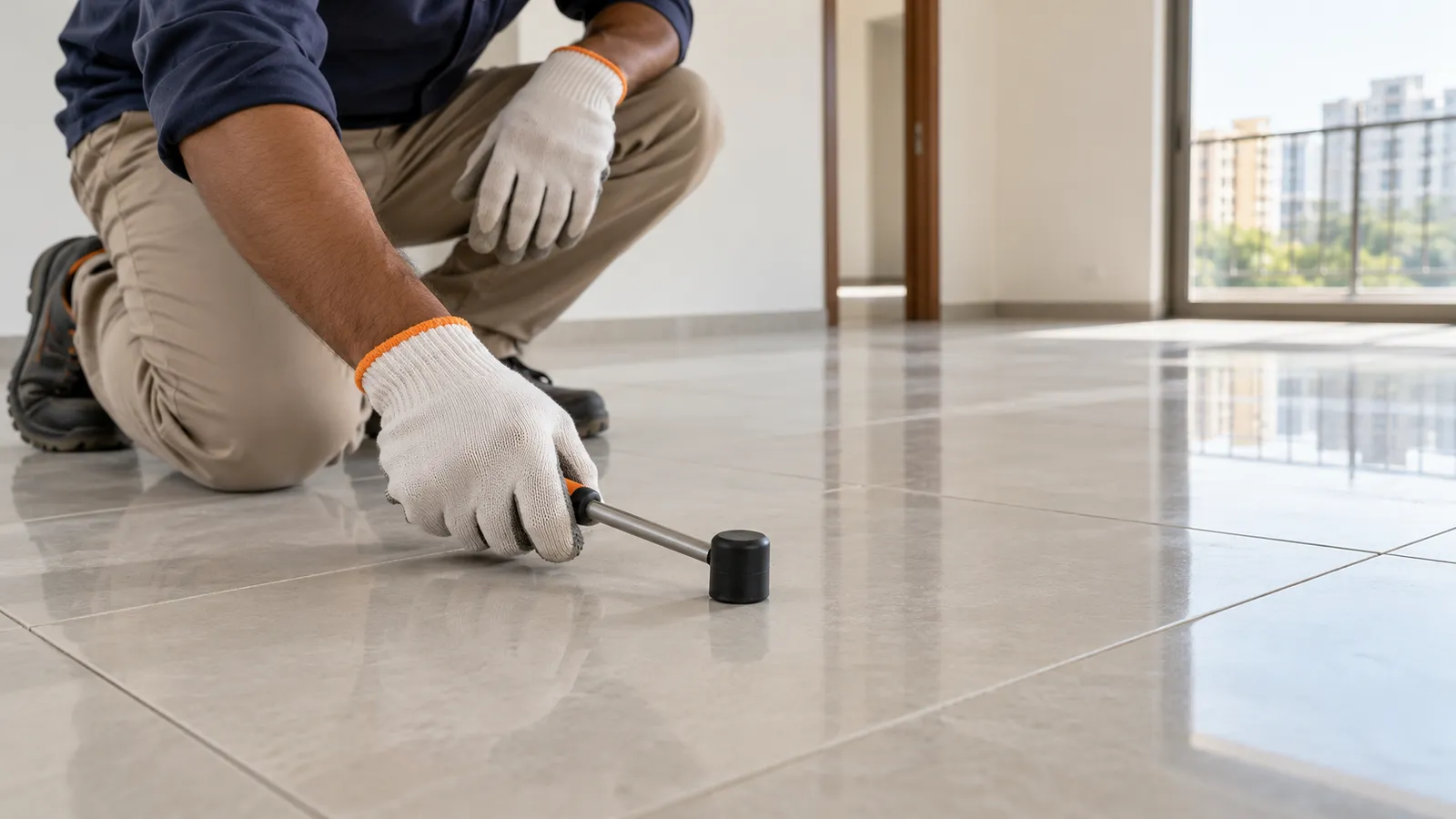
At inspection, ask what the sound observation means and what the inspector could not verify. A count of tiles that sound different does not tell you how many have failed to bond to the layer below. Record the floor before wardrobes, beds and protective sheets restrict access, and keep the findings within the complete flat handover checklist.
Why can tiles sound different without revealing the cause?
The layers beneath a tile affect its sound. The National Tile Contractors Association's technical response on hollow-sounding tiles explains that sound differences alone do not establish that the installation has failed. Its discussion concerns North American standards; it helps explain the limits of a sound check. Its numerical criteria are not Indian requirements in this guide.
Schlüter gives a product-specific example: it states that coverings installed over its DITRA-DRAIN system may sound hollow when walked on or tapped. That does not establish that such a system exists in your flat. Ask which layers and system the builder installed before interpreting the sound.
Ask for a hollow sound to be assessed even if there is no visible damage. LATICRETE's concrete and masonry troubleshooting sheet lists several possible causes, including movement in the base beneath the tiles, contamination and insufficient mortar. A specialist needs to investigate these possibilities; a phone recording cannot identify which caused the sound.
What observations make follow-up more urgent?
Record cracks, movement and other changes as separate observations. They need attention even if the builder and inspector disagree about what a tapping test establishes.
| Observation | What to record | Sensible next step |
|---|---|---|
| Sound difference only | Exact tile and part of tile identified | Request assembly details and a technical response |
| Cracked tile or grout | Location, pattern and dated photographs | Ask for the cause to be assessed before cosmetic repair |
| Movement during normal use | Where movement was noticed; do not force it to move again | Limit use of the affected spot until it has been assessed |
| Raised or lifted tile | Wide view showing its position and accessible close-up | Keep people away and request prompt professional assessment |
| Wet-area concern alongside tile damage | Relevant staining or leakage history | Consider the tile and waterproofing questions separately |
Do not strike tiles harder to obtain a clearer sound, jump on a suspect area or lift a tile yourself. Keep people clear of loose wall tiles or raised floor edges. A general PDI also cannot determine structural safety from a tile crack; any structural concern needs a suitably qualified assessment.
How do you record the location so someone can find it again?
Use a room plan, a fixed reference and a simple numbered grid. Name the corner or doorway where the grid starts, then label the observed tiles. Add an overview photo before close-ups. In a large apartment, "living room, beside balcony doorway, tile B3" is more useful than a collection of unlabelled images.
If a professional checks tile sounds without damaging them, ask them to record the method, area they could reach and limitations. A phone recording can support the record. It cannot measure how strongly the tile is bonded. The inspector should distinguish tiles they checked from those they could not reach under stored materials or protective coverings.
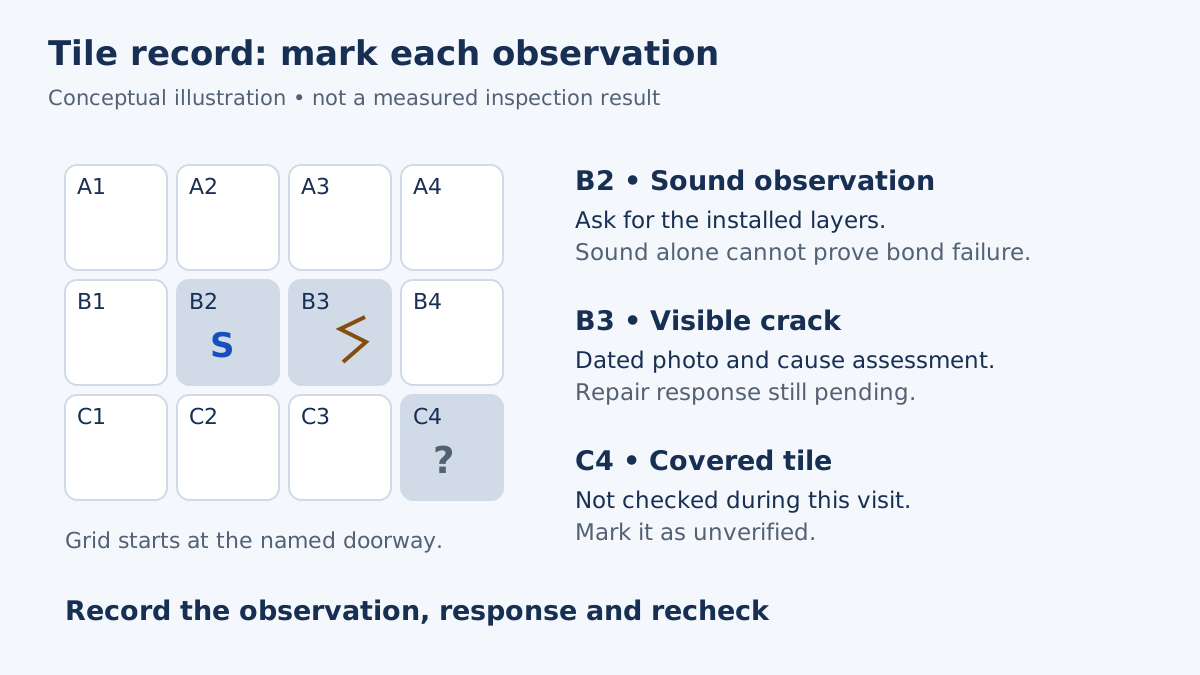
Keep a practical record with five pieces of information: location, observation, accompanying signs, builder response and status. Use status labels such as "assessment requested", "repair proposed" and "recheck required". One mapped area needing investigation is not enough to call the whole floor defective.
What should you ask the builder to explain?
Ask the builder which tiles and layers they installed, what adhesive or mortar they used, and which specification they are using to assess the concern. If the explanation is "this is normal for the system", ask which system and what manufacturer information supports that statement. If the response is "replacement is required", ask what evidence identifies the problem and how the affected extent was determined.
The Tile Council of North America's discussion of cracked tile cautions that identifying the cause of cracking or separation requires on-site investigation. The cause may lie beyond the visibly damaged tile. Ask for that investigation before assigning responsibility.
A competent tile specialist may need to open a limited area to examine the layers beneath the tiles. Agree this separately from a handover visit that does not involve opening surfaces. Give permission only after agreeing the locations, records and how the specialist will restore the area. In a bathroom, also establish how any affected waterproofing will be handled. Removal is not the default response recommended here.
How should repairs and unresolved items be closed?
Keep the original location labels through the repair process. Record who did the work, what they changed and when. Include any restrictions before you can use the area again. Ask the installer for curing and use instructions for the materials they used; an online generic waiting period is not enough.
At recheck, compare the recorded problem with the current condition. Check whether the crack has been addressed and whether the tile still moves. Ask whether the specialist assessed the cause or changed only the visible finish. A different tapping sound after repair is not, by itself, proof of compliance or long-term performance.
If the floor is now covered by interior work, keep any inaccessible location marked unverified. The home inspection report guide can help you organise the evidence and responses. Confirm the scope of any follow-up visit rather than assuming it repeats every original check.
What are the common buyer questions?
Is there an acceptable percentage of hollow tiles?
This guide gives no universal acceptable percentage. Counting sound differences cannot establish mortar contact or how well the tiles are bonded. Ask which project requirement and assessment method apply.
Does fresh grout solve a hollow sound?
A neat grout finish does not explain the underlying assembly. Ask what caused the observation and why the proposed work addresses it; do not judge closure only by appearance.
Should this be checked before interiors begin?
If you can access the floor, record it before interiors begin so you have a reference for later discussions. Keep dated records of both builder work and subsequent interior changes without assuming either caused a defect.
Discuss pre-delivery inspection with the rooms involved, visible accompanying signs and access conditions. Ask for a clear record and advice on the next investigation. A decision to demolish needs supporting evidence.
Related reading
Sources and further reading
- NTCA / TileLetter: hollow-sounding tiles and industry standards, July 2026; limits of sound-based conclusions; North American context.
- LATICRETE: TDS 209, April 2026; possible causes in concrete and masonry tile installations.
- Schlüter: DITRA-DRAIN 4; acoustic behaviour of this named system only.
- TCNA: cracked tile causes and misconceptions, May 2008; why on-site investigation matters; not an Indian acceptance code.