seepage · 4 min read
What is the difference between seepage, leakage and dampness?
Leakage, seepage and dampness are not the same problem. What each word means, how they are linked, and how an inspection traces the damp to its cause.
A damp patch tells you moisture is present, but not how it got there. A leaking pipe can feed seepage through a wall; rain or condensation can also leave a damp surface. These terms help describe what you see, while an inspection works out the cause.
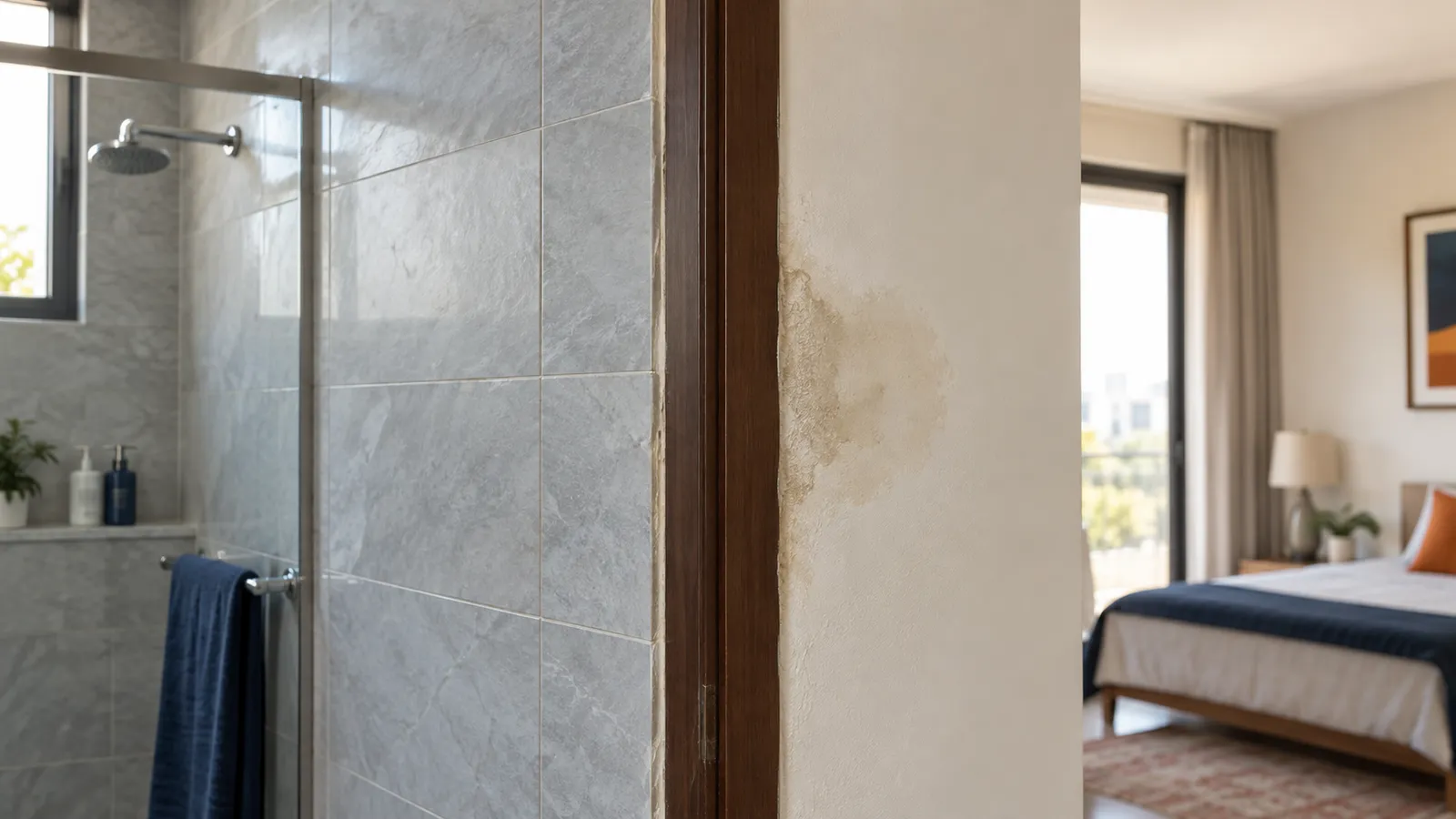
Leakage: water escaping from where it should be
Leakage means water has escaped from something built to hold or carry it. A cracked supply pipe inside a wall, a loose joint under the kitchen sink, a failed tank or a blocked drain that overflows all leak. The water keeps coming while the line is in use, so leak damage often grows quickly.
Seepage: water moving through the building
Seepage means water is travelling slowly through a material that should keep it out: plaster, brick, concrete or a tiled floor. The water may come from a leak, from rain soaking into the terrace or an outer wall, from a wet bathroom next door, or from the ground rising into the base of a wall. It can show up well away from where it entered.
Dampness: what you actually see
Dampness is the moisture on or just under the surface: a dark patch, bubbling or peeling paint, a white powdery bloom, mould or a musty smell. Condensation in a bathroom or kitchen can also make a wall damp without any leak at all. Dampness tells you water is there, not where it came from.
Side by side
| Leakage | Seepage | Dampness | |
|---|---|---|---|
| What it is | Water escaping from a pipe, tank, drain or fitting | Water passing slowly through a wall, floor or roof | Moisture on or just under the surface |
| Where it starts | The failed pipe or fitting | Wherever water gets into the structure | It is the end point, not a start |
| How it shows | Drips, wet floors, a patch that grows while water is used | Patches after rain, near wet areas or at the base of walls | Stains, peeling paint, white bloom, mould, smell |
| What fixes it | Repairing the pipe or fitting | Sealing the path the water takes | Fixing the cause, then restoring the surface |
How the cause is found
The cause is found by working back from the damp patch to where the water enters. An inspector looks at the pattern of the damp, what sits on the other side of the wall or above the ceiling, and whether it changes with rain or water use. Ask the inspector what checks support the finding and what remains uncertain. Thermal imaging has limits, explained in what thermal imaging can and cannot prove.
Why the difference matters for the repair
The repair depends on the cause, so naming the problem correctly saves money. A leaking pipe needs the pipe fixed; seepage through a terrace needs the terrace sealed; condensation needs ventilation. Repainting a damp wall without fixing the cause is why the damp patch comes back after painting.
When to call an inspection
Call for an inspection when a damp patch keeps growing, returns after painting, or appears after rain and you cannot tell where the water is coming from. You receive a written report as a PDF on WhatsApp after the visit, and any repair quote is based on it. Seepage and leak inspection in Delhi NCR, wall seepage, what a seepage inspection costs.
If the damp keeps growing or returning, request a callback about tracing its source.