seepage · 3 min read
Why does the damp patch come back after painting?
Paint hides a damp patch but does not stop the water behind it. Where that water usually comes from, and what to do before you repaint the wall again.
Paint can hide a damp patch for a while, but it cannot stop moisture entering the wall. A returning patch may point to a pipe, a nearby wet area, rainwater or condensation. Find the cause before paying to repaint it again.
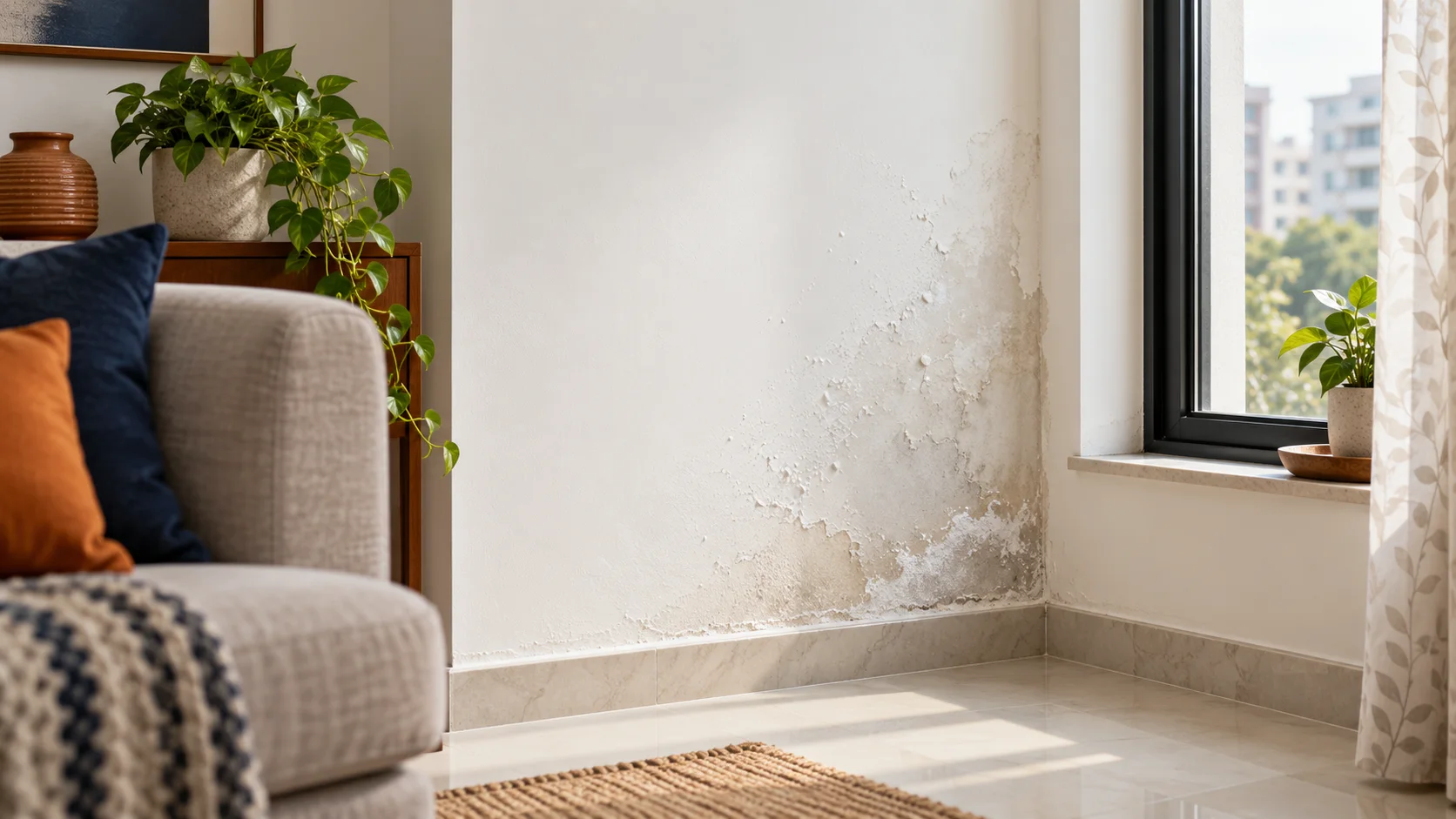
What it looks like when the damp comes back
The damp usually returns in the same place, often larger. Common signs are paint bubbling or flaking, a dark ring around the old patch, a white powdery bloom where salts dry out of the wall, black mould spots, and a musty smell. If the patch grows after rain or after heavy water use nearby, that is a clue to where the water comes from.
Where the water usually comes from
The water comes from one of a few places, and only an inspection tells them apart. These are possibilities, not a diagnosis:
- a concealed supply or drain pipe leaking inside the wall;
- a bathroom or kitchen next door or above, where the waterproofing under the tiles has failed;
- the terrace or roof, when the patch is on a top-floor ceiling or wall;
- an outside wall with cracks or gaps around windows, when the patch grows after rain;
- damp rising from the ground, when the patch sits at the base of a ground-floor wall;
- condensation, in a bathroom or kitchen without enough ventilation.
Why a new coat of paint, or putty, does not hold
Paint and putty sit on the surface, and the water arrives from behind. As long as the wall stays wet, new paint cannot bond to it, so it lifts again. A coating on the inside face of the wall does not stop water reaching the wall, so the damp often shows again at the edge of the coated area or on the next wall.
What to do before you repaint
Fix the source first, then let the wall dry, then restore the surface. Once the leak or seepage path is sealed and the wall has dried out, the affected area is redone with a primer, putty and paint suited to damp-prone walls, so that it matches the rest of the wall. Painting over a wall that is still wet starts the cycle again.
When to call an inspection
Call for an inspection before you repaint a patch that has already come back once. It shows where the water is coming from, so the repair targets the cause and not the paint. Seepage and leak inspection in Delhi NCR, wall seepage.
If the patch has returned after painting, request a callback to discuss a seepage inspection before more finishing work.
Related: What is the difference between seepage, leakage and dampness?