seepage · 3 min read
Can a thermal camera prove where a leak is?
A thermal camera shows where a surface is cooler, not where water enters. What thermal imaging can show about a leak, what it cannot, and how to check.
A cool patch in a thermal image is a clue, not proof of a leak. A camera measures surface temperature; cold pipes, draughts and shade can look similar to damp. Suspected moisture needs a separate check before anyone names the cause.
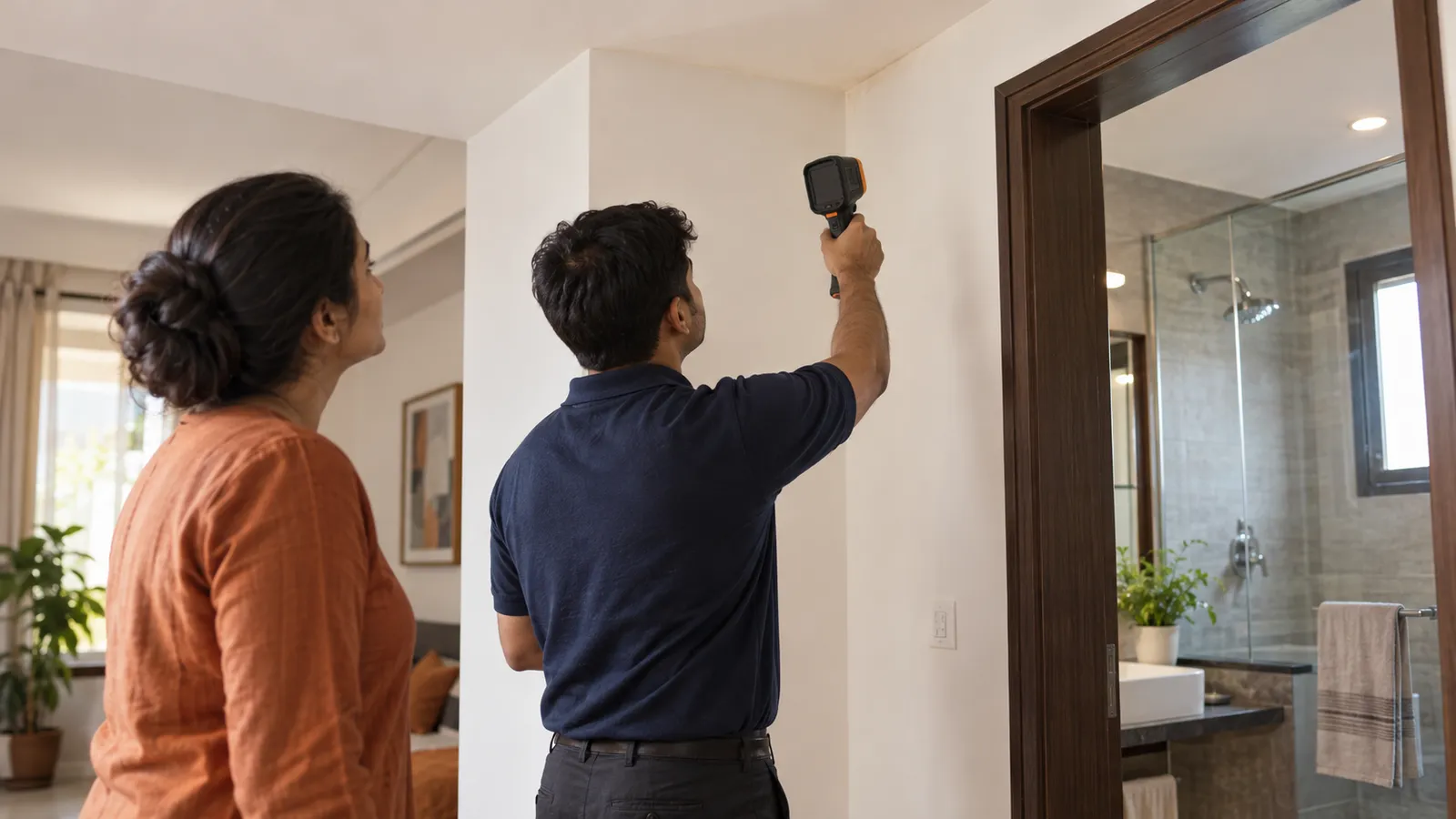
What a thermal camera actually shows
A thermal camera shows the surface temperature of a wall, floor or ceiling as a picture. Water cools a surface as it evaporates, so a damp area often shows as a cooler shape. The camera does not see water and does not see inside the wall; it sees the temperature of the surface you point it at.
What it can show about a leak
Thermal imaging is good at showing where to look. It can show how far damp has spread behind paint or tiles, whether a cool patch follows the line of a concealed pipe, and which side of a wall is wetter. That narrows down the area before anything is measured or opened, which is why it is a common first step.
What it cannot prove
It cannot prove that a cool patch is wet, where the water enters, whether the leak is still active, or what has failed. A cool shape can come from a draught, a cold water pipe, a gap in insulation or shade on an outside wall. The picture also depends on conditions: with little temperature difference between the wet and dry areas, a damp patch may barely show. FLIR's guidance on detecting water leaks makes the same point about confirming moisture with measurements.
Thermal imaging vs a moisture meter
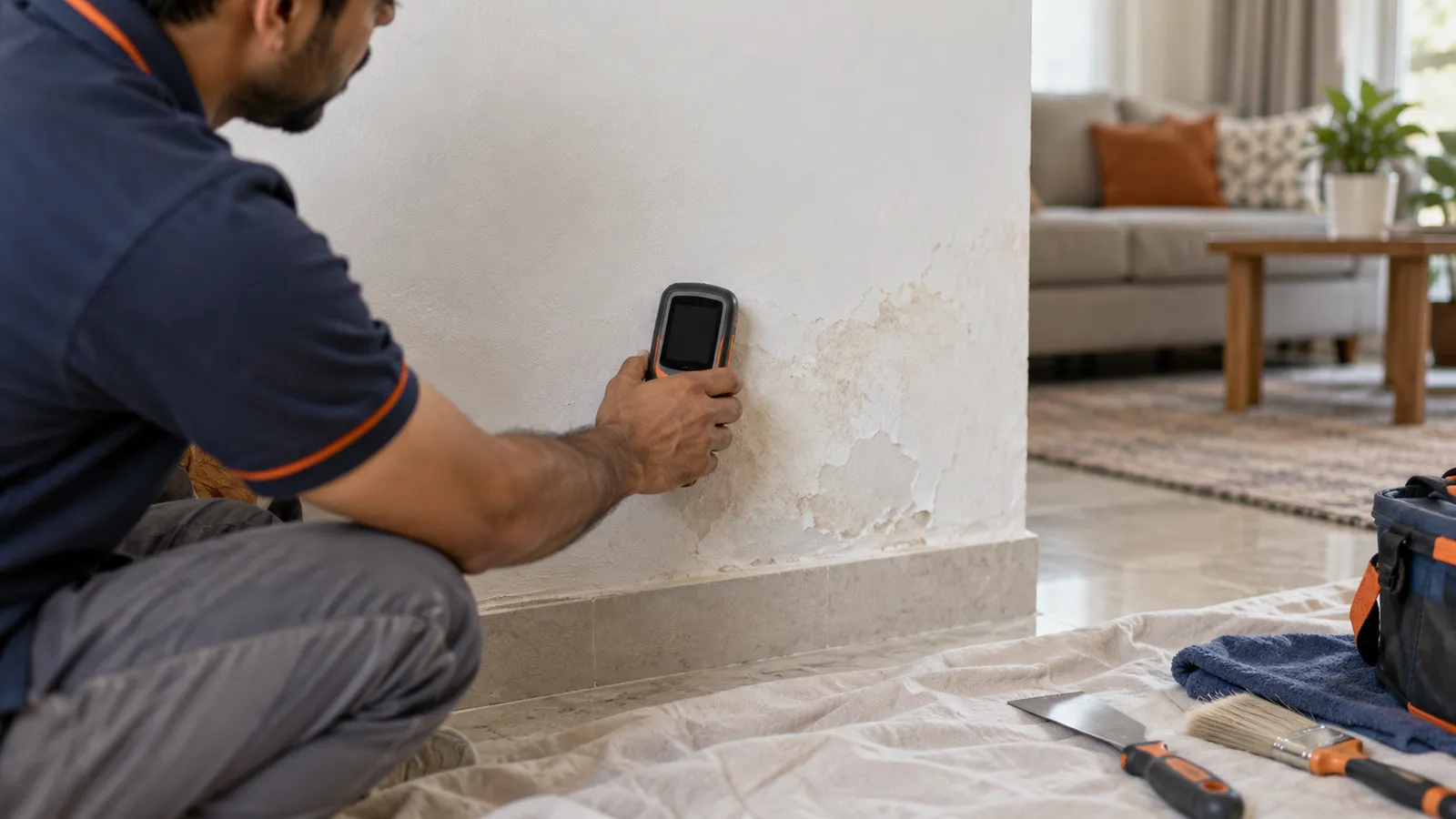
| Thermal camera | Moisture meter | |
|---|---|---|
| What it reads | Surface temperature across a whole area | Moisture at the spot it touches |
| Good for | Seeing the shape and spread of a cool, possibly damp area | Confirming that a patch is actually wet |
| Cannot tell you | Whether the cool area is wet, or where water enters | How far the damp spreads beyond the spot tested |
| Used together | Shows where to measure | Confirms what the picture suggests |
How an inspection uses it
A careful inspection treats the thermal picture as a lead, not a verdict. Ask the inspector how they will check a suspected damp patch and confirm the cause before recommending repairs. If the entry point remains uncertain, ask the inspector to record that limit in the report. See how the leak is found for the full method.
When to call an inspection
Call for an inspection when you have a damp patch and want the source found before paying for a repair, or when someone has shown you a thermal picture and named a cause without confirming it. Seepage and leak inspection in Delhi NCR, ceiling leakage.
If a thermal image has raised a question about a leak, request a callback about confirming the cause.
Related: What is the difference between seepage, leakage and dampness?