seepage · 7 min read
Can an intermittent leak be found on a dry day?
A dry-day leak inspection can still help. Learn what to record, how access affects the visit, and what an inconclusive finding should tell you next.
An inspector may be able to investigate an intermittent leak on a dry day, even if they cannot reproduce it or establish its source. Old marks, photographs and a clear history of when it happened can help them plan their checks. The report should record that the surface was dry during the visit. That observation does not prove the problem has gone away.

What can a dry-day visit establish?
The inspector can record the condition of areas they can reach, review where the symptom appeared and identify areas they still need access to. They can then decide what to test next. They may find a visible defect, but they need supporting evidence to connect that defect to your stain.
For example, the ASHI Standard of Practice describes reporting on inspected conditions at the time of the visit and recording items not inspected. It is a US professional standard, not an Indian service contract or a promise about Ezeetask's package.
For an intermittent concern, agree the investigation question before the appointment. "Check why the ceiling becomes wet after some showers" is more useful than "certify the bathroom is leak-free". Tell the provider if the patch is dry now, so you can agree what the visit should cover and what it may leave unresolved.
What should you record when the patch reappears?
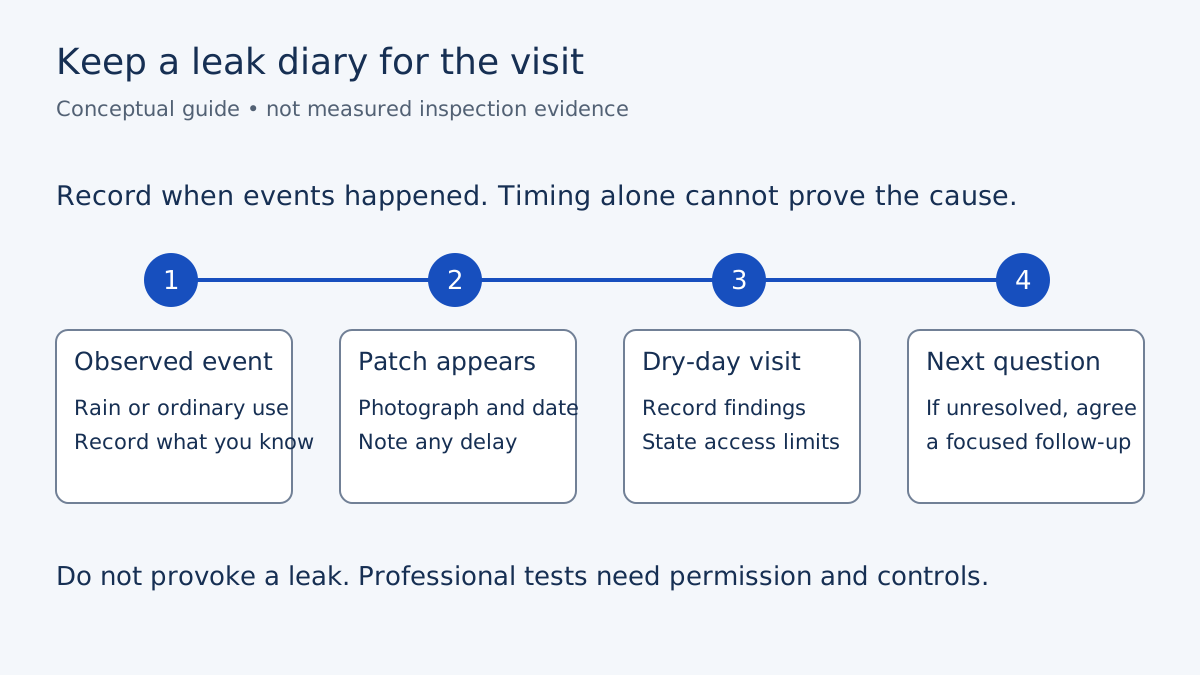
Create a simple diary using ordinary observations. Do not change how the property is used to provoke leakage. Photograph the same area from a recognisable position, then add a close-up if it helps show an edge or drip. Preserve original dates and avoid editing photographs to exaggerate contrast.
| Record | Useful detail |
|---|---|
| When first noticed | Date and approximate time, including if uncertain |
| Visible change | New drip, darker edge, spreading patch or no change |
| Recent weather | Rain you observed; avoid guessing exact rainfall |
| Ordinary fixture use | Shower, wash basin or AC use already known to you |
| Delay | Whether the mark appeared immediately or later |
| Previous work | What was repaired or repainted, and when |
| Evidence gap | A day you were away is unknown, not a dry-day observation |
The diary records the order of events; it cannot prove what caused the leak. If you notice a patch after rain, the inspector may still need to check other sources. If it appears after bathroom use, they still need to establish whether water came from a supply line, drain, joint or another route.
Should you wait for rain before arranging help?
Discuss visit timing with the provider. You do not need to wait without a plan until you can photograph an active leak. If the problem is stable, its history may help the provider choose a useful time to visit. If water is causing damage now, get appropriate help rather than leaving the leak running for the appointment. The EPA's homeowner guide recommends prompt attention to leaks and drying affected materials.
Stay away from water near electrical points and from loose or bulging overhead finishes; seek qualified assistance. Do not touch wet switches, open electrical covers or climb onto a wet roof to collect evidence. A photograph from a safe accessible position is enough for your initial account.
For a concern associated with Delhi NCR monsoon rainfall, the terrace waterproofing and monsoon guide provides background. It does not establish that the terrace is responsible for a particular ceiling patch. In an apartment, another flat, a shaft or common drainage may also need authorised access.
Can equipment find a leak that is not active?
An inspector can use equipment to gather more observations. The results depend on what the instrument measures and the conditions during the visit. FLIR explains that thermal imaging shows temperature patterns; the inspector needs further evidence to confirm suspected moisture. A thermal camera cannot see through the wall or guarantee that the inspector will locate a source on a dry day. See FLIR's explanation.
Ask what the inspector can rule out from a normal-looking result and what they still need to check. "No relevant anomaly observed today" means they saw no relevant unusual pattern at that visit. It does not mean "no concealed leak exists". The thermal imaging limits article explains how to interpret these pictures.
Before choosing another test after an inconclusive result, ask which possible source the inspector still needs to check. Agree what result would help distinguish it from other sources and whether they can reach the area.
How should controlled testing be arranged?
A competent professional should select and supervise any test that intentionally introduces water or changes system conditions. Before it starts, clarify the area involved, permissions, risk controls and who can stop the test. This article is not a procedure for flood, pressure, hose or roof testing.
Apartment access is often the practical constraint. Confirm whether the upstairs resident, maintenance team or common-area representative must attend. Give them the specific access request, rather than asking for unrestricted entry. If a person is unavailable, record which question remains unanswered and arrange the next step through the proper channel.
Ask whether a proposed follow-up is included in the agreed visit or requires a separate scope and charge. Record the agreement before the visit so both sides understand what "detection" covers and what it can establish.
What should an inconclusive report say?
Ask the inspector to state your concern, what they observed and checked, and why they could not yet establish a source. The report should distinguish an area they could not access from a test they completed without a relevant finding. It should also name a next action you can arrange.
For example, a hypothetical note might say: "Owner reports intermittent staining after rainfall; no active drip observed during the visit. External junction not accessible. Rain association remains unverified. Arrange authorised access before selecting the next investigation." This is an explanatory example, not an Ezeetask case result.
Keep that note with the photographs and diary. If the patch returns, send the updated evidence against the same location reference. You can then discuss what changed with the inspector without having to rebuild the history from memory.
Frequently asked questions
Does a dry visit mean the inspection was useless?
No. It may narrow the next question or document an access limitation. Its value depends on what the inspector establishes and records.
Should I run every tap before the inspector arrives?
Do not stage uncontrolled tests. Describe ordinary use and follow the provider's agreed preparation instructions.
What should I send when requesting an appointment?
Send the location, recurrence pattern, dated photographs, previous repairs and access constraints. Discuss these with the water leakage detection team so the visit addresses the unresolved question.
Related reading
If you have a visible damp patch, the wall seepage guide helps you record the symptom before discussing investigation or repair.
Sources and further reading
- ASHI Standard of Practice: time-of-inspection and uninspected-area boundaries; not Indian law.
- EPA homeowner moisture guide: prompt leak attention and moisture control.
- FLIR thermal leak guidance: temperature patterns and corroborating moisture evidence.