seepage · 7 min read
Seepage from the flat above: what to document
Document ceiling seepage with dated photos, a neutral history and joint access. Learn what a patch can prove before discussing repairs with neighbours.
If you suspect seepage from the upstairs flat, record where the patch is, when it appeared and how it changes. Note any connection with water use before deciding on a cause. A ceiling patch shows where moisture is visible, but cannot establish which pipe, bathroom or property is responsible. Share your records so both households can arrange access and agree what needs checking.
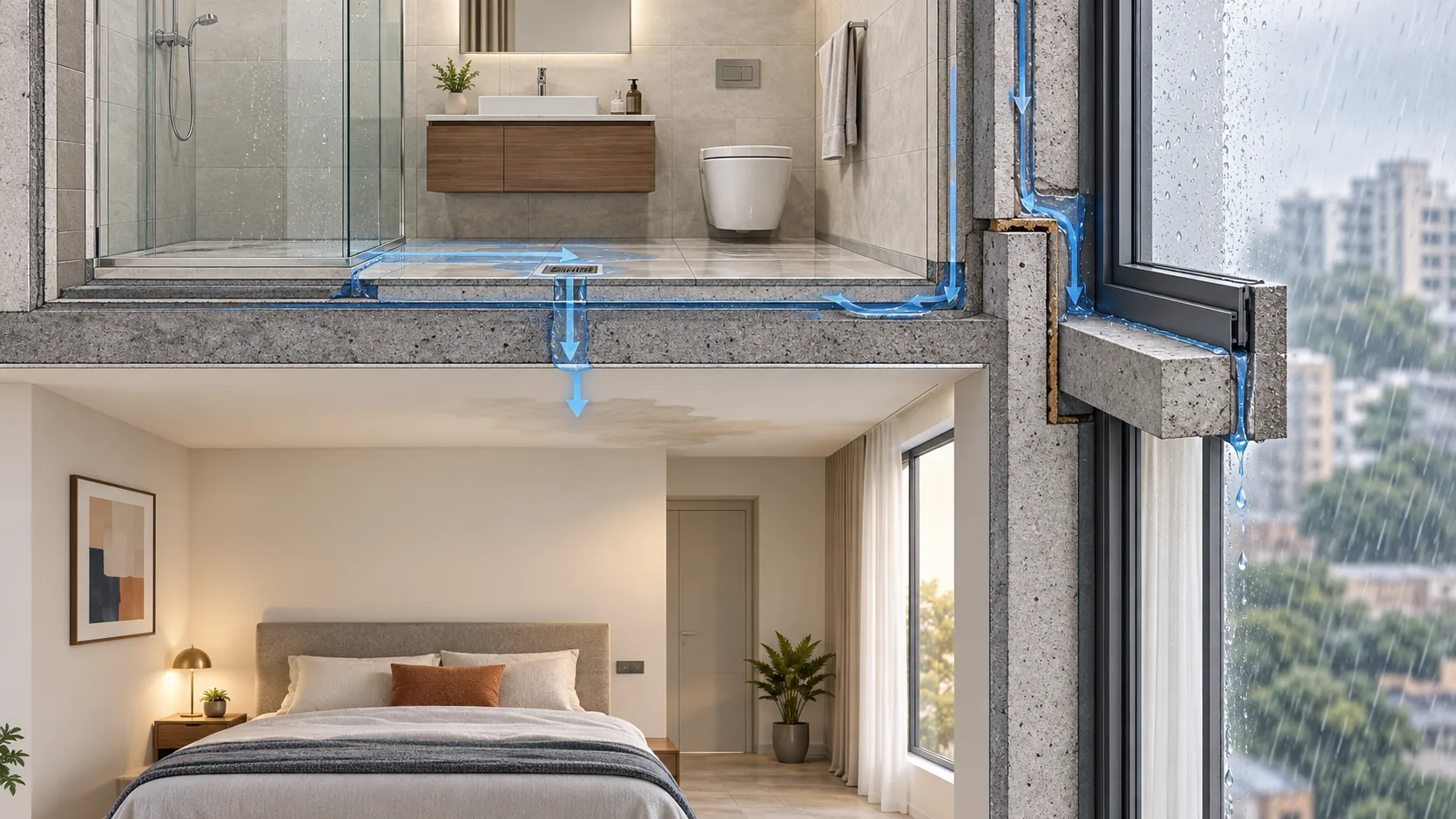
Does a ceiling patch prove the leak starts above it?
Water can move through building materials and along the joints between them before it becomes visible. Rainwater entry, plumbing leakage and condensation, where moisture in the air collects on a cooler surface, have different causes; the WBDG moisture guidance explains why an investigation should consider more than one. Start by asking about the room above the stain, without treating its occupant as responsible.
Write "patch on bedroom ceiling beside the bathroom wall" rather than "upstairs shower waterproofing failed". You can observe the patch; you need evidence to establish a waterproofing failure. Our explanation of seepage, leakage and dampness helps keep those descriptions separate.
In a Delhi NCR apartment, the inspector may need access to your flat, the flat above and a common service shaft, the space that carries shared pipes or other services. Sketch the room layout, but do not assume bathrooms or other wet areas line up across floors after alterations. Ask whether drawings are available and whether either household has changed plumbing or room use.
What should you photograph and record?
Organise your notes and photographs so someone can understand them without standing in the room. Keep original photographs and put labels in a separate note so that dates and visible details remain intact.
| Record | What to include | What it helps establish |
|---|---|---|
| Wide photograph | Whole wall or ceiling with a door or corner visible | Where the concern is located |
| Close photograph | Patch edge, peeling finish or visible drip | What changed at that location |
| Date and time | When noticed and when photographed | Order of observations |
| Conditions | Rain, normal water use if known, recent repair | Possible associations to investigate |
| Previous work | Area treated, date and available invoice | What has already been attempted |
| Access note | Rooms or shafts unavailable | What remains unchecked |
Use the same viewing position for later photographs. Describe growth against a fixed feature, such as the distance from a wall corner, without climbing or disturbing the ceiling. A short video can make an active drip easier to see than several still photographs. Photograph only the relevant property details; avoid neighbours, personal belongings and identifiers when sharing outside the inspection discussion.
Separate what you saw from what someone told you. Write "Neighbour reports shower used at 8 am" if you did not observe it. Leave a note saying "unknown" where you have no information; a blank entry does not prove that nobody used water.
How should you approach the neighbour and society?
Ask for an inspection with access to both flats and share a few labelled photographs. You could write: "The damp patch on our ceiling near this wall keeps returning. These are the dates we noticed changes. Could we arrange access to check the possible water routes together?" Keep the request focused on checking the cause.
Agree who will coordinate entry, which rooms may need access and whether maintenance staff must open a common area. Confirm a time when an authorised person can attend each property. Tell the inspector in advance if the neighbour is unavailable; the inspector cannot gather the same evidence from your ceiling alone as from both sides.
Keep a shared action list with four fields: observation, next check, person coordinating it and status. Avoid mixing the technical question of where water enters with an immediate demand about who must pay. Agree a process for responsibility, permissions and any dispute. A photograph cannot settle legal responsibility.
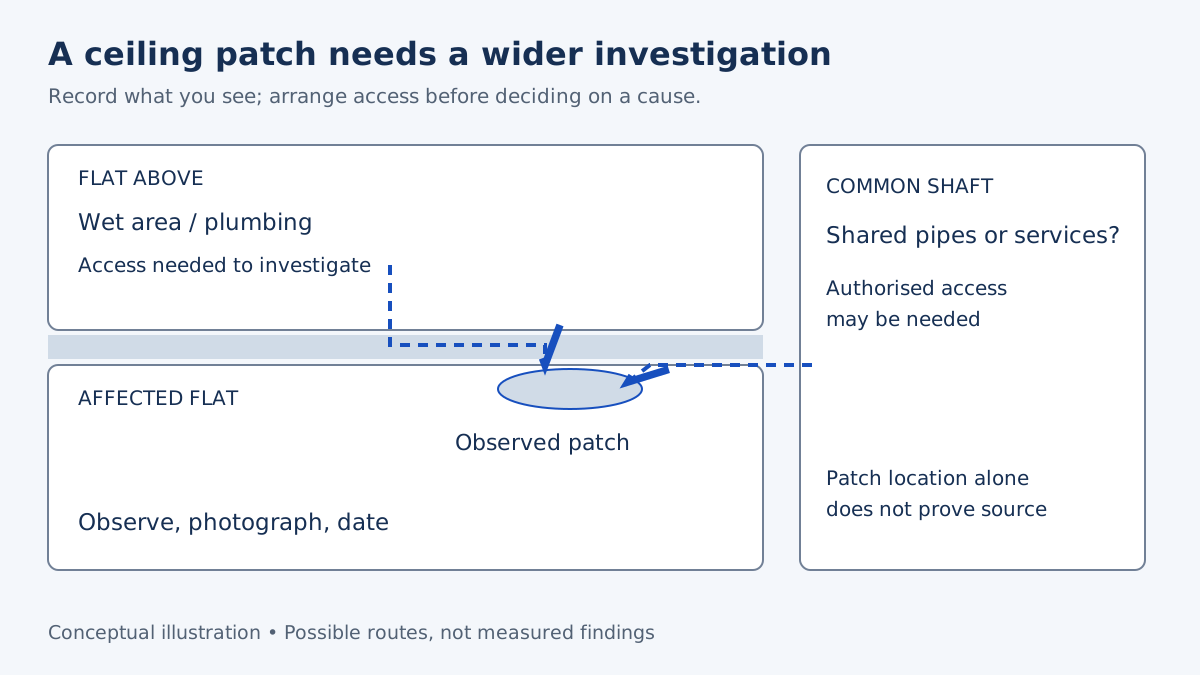
What if the upstairs flat cannot be accessed?
The inspector may still record the affected area and suggest next checks. Ask them to state in the report which areas they could access and which explanations they could not resolve. "No active drip observed during the visit" does not mean "no leak exists".
For an example of how professionals describe inspection limits, InterNACHI's published inspection standard describes observations made at the time of inspection and limits concerning hidden or inaccessible conditions. It is an overseas standard, not Indian law or Ezeetask's service contract. Ask the inspector to list areas they could not check so nobody mistakes them for satisfactory findings.
Ask which additional access would change the conclusion. It might be entry to a bathroom, inspection of a shaft or a specialist check. Do not arrange uncontrolled flooding, open pipework or operate common valves to recreate the problem. Testing needs an agreed method and someone responsible for protecting both homes.
What should happen before repainting?
Agree the investigation or repair step first, including how the professional will check the result. The EPA moisture-control guide describes preventing unwanted wetting and allowing wet materials to dry as separate parts of moisture management. A new coat of paint does not prove that someone has corrected the entry route.
Before closing the job, keep the original photographs and follow-up notes. Record where the professional worked and the cause they identified, or what they could not confirm. Ask the repair professional when the surface is suitable for restoration and what evidence they will use. There is no universal number of dry days that proves every concealed leak is resolved.
If water is near electrical fittings or the ceiling appears loose or sagging, keep away and contact building maintenance and an appropriate professional without delay. Do not touch fittings or press the ceiling to investigate.
Questions before an inspection
Should I wait until the stain becomes larger?
Record the current condition and arrange the appropriate next step. Dated photographs of a small stain give you a record before painting or false-ceiling work hides the area.
Can a thermal image establish whose flat caused it?
A thermal image records surface-temperature patterns. An inspector needs to interpret them alongside site observations and other evidence before drawing a conclusion about the source. Ask what the image supports and what remains unverified.
What should I send before requesting an inspection?
Send the room location, two or three labelled photographs, the timing history and available access. The ceiling leakage guide helps describe the concern; seepage and leak assessment is the relevant next step when the source needs investigation.
Related reading
Sources and further reading
- WBDG: Moisture Management: general moisture mechanisms, not a diagnosis of a particular flat.
- US EPA: Moisture Control Guidance, December 2013: moisture movement and control principles; not Indian regulation.
- InterNACHI: Home Inspection Standards of Practice, January 2018 edition: an example of observation and access limitations, not the agreed scope of a specialised seepage inspection.