home inspection · 7 min read
Window and door snags to record in a new flat
Record window and door operation, locks, gaps and visible damage in your new flat, with clear locations and limits on what a dry-weather PDI can establish.
For window and door inspection in a new flat, record how each accessible unit opens, closes and locks. Keep separate entries for visible damage, gaps and stains around the frame. A window that closes without catching worked during that check. That does not verify rain resistance, sound insulation or hidden joints between the frame and wall.

Inspect before curtains, pelmets, cabinets and protective coverings hide parts of the doors and windows. In a Delhi NCR apartment, arrange keys, safe balcony access and the builder's representative where needed. Keep the record with your whole-flat handover checklist, so these findings stay on the same snag list as other issues that need follow-up.
How should you identify each door and window?
Identify each door or window before describing the problem. "Bedroom window faulty" is difficult to act on if the room has several opening panels. "Bedroom 2, balcony-facing window, right sliding panel viewed from inside" lets someone find the same panel again.
A simple room plan with labels such as W1 and D1 helps the builder and inspector discuss the same item. Add a wide photograph showing the room position and a close photograph of the concern. State which side of the unit is shown. Someone receiving the photographs can then identify the unit without asking the photographer.
Record whether the unit is fixed, sliding, hinged or another type. A fixed pane should not be judged against an opening-window checklist. If you do not know how it operates, ask the installer to demonstrate it. Do not force a handle or panel.
What should be checked open, closed and locked?
Ask the inspector to check normal operation within safe access and the agreed scope. Do not stress-test the hardware. Stop if a panel looks loose, damaged or at risk of falling, and let the responsible professional assess it.
| State | Observation to record | Useful detail |
|---|---|---|
| Opening | Dragging, scraping, obstruction or unusual resistance | Where in the travel it occurs |
| Fully closed | Whether the leaf or panel seats without force | Corner or edge that remains displaced |
| Locked | Whether the intended latch or lock engages | Which handle, latch or locking point |
| At rest | Visible damage, missing fittings or displaced seal | Wide photo plus close-up |
| Not operated | Missing key, unsafe access or unfinished installation | Reason and follow-up owner |
Door and window operation appears in InterNACHI's inspection standard, which specifies a representative number under its own scope. Agree how many units your inspector will check, and ask them to identify those they did not test. The standard does not set the coverage of your visit.
For internal doors, record any rubbing against the frame or floor, a latch that misses the plate it should fit into, or a handle that moves without operating the latch. Avoid prescribing a standard gap around every door: material, hardware, intended ventilation and the specified door assembly can differ. A general visual inspection may not verify the requirements for specialist doors.
Which gaps matter, and which openings may be intentional?
Describe the location and function of an opening before asking anyone to fill it. Distinguish a gap where the frame meets the wall from a drainage opening built into the window.
Andersen's window and door glossary distinguishes weatherstrip, which seals an opening panel against its frame, from weep holes provided for drainage. Use those terms to describe what you see, then check the installed manufacturer's design. Do not ask a painter to seal every visible hole.
Look from a safe position for a seal that appears displaced, torn or incomplete, and record it without pulling it out. Note visible cracks or gaps around the frame and any staining below or beside the opening. Mark an exterior joint as unverified if the inspector cannot see it from a safe position. Do not lean outside an upper-floor window or remove a restraint for a closer view.
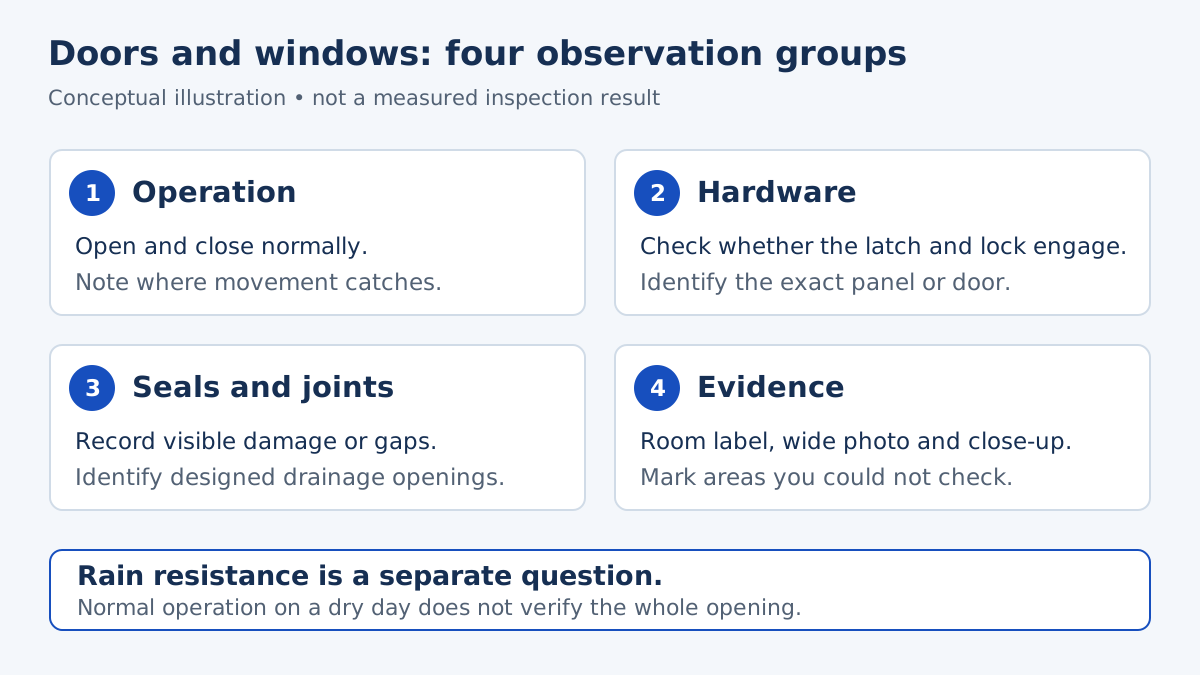
Does closing a window prove that rain will stay out?
No. Operation and water management are separate questions. The US Whole Building Design Guide explains that window installation and surrounding water-management details affect the wall's moisture performance. Its examples of framed walls show why checking the moving panel alone cannot assess the whole opening. They are not specifications for a Delhi NCR apartment facade or Indian legal requirements.
If the inspection happens in dry weather, say so. If the owner has seen leakage during rain, record the date, room, weather context and first visible location. A stain beneath a window may help the specialist investigate. It cannot show where water entered on its own.
Ask the builder or facade/window specialist what evidence is needed for the specific concern. Controlled water testing, when appropriate, requires a professional method and authorised access. Spraying a hose from inside, pouring water into tracks or reaching outside is not a substitute for that assessment.
How can the snag record make a repair easier to check?
Keep appearance, operation and moisture observations in separate entries when they require different responses. "Scratch on frame" and "lock does not engage" should not disappear into one broad "window issue" that is closed after repainting.
For each entry, keep these fields:
- Unit label and precise panel or door location.
- Observation and the operating state in which it occurred.
- Photograph or short video reference, without personal details.
- Builder response and proposed action.
- Recheck date, outcome and anything still unverified.
An example entry could read: "W3, left sliding panel: lock did not engage when closed normally; installer to assess alignment and locking hardware." The installer can repeat the check; the entry does not assign a cause.
After the installer reports an adjustment, check the original symptom again during safe normal use. If the frame was repainted but the latch still misses, the operation entry remains open. The home inspection report guide offers context for organising findings; agree the actual reporting and follow-up scope separately.
What else should new-flat owners know?
Is every visible gap a defect?
No. Record it and ask what the assembly requires. Drainage openings and designed clearances must be distinguished from incomplete joints or displaced parts.
Can a PDI certify glass safety or burglary resistance?
A general condition and operation record does not establish those performance claims. Ask for the relevant product identification and specialist evidence where that is the question.
Should all doors and windows be included?
Specify that expectation before booking, including balconies and locked rooms. The report should identify any agreed unit that was inaccessible or not operated.
For pre-delivery inspection, share the flat layout, any existing window leakage history and which areas need access arrangements. Agree which checks and records you need before the visit.
Related reading
Sources and further reading
- InterNACHI: residential inspection standard; operation checks and scope limitations, not an Indian legal standard.
- Andersen: window and door glossary; definitions of weatherstrip and drainage openings.
- WBDG: residential building enclosure; installation and water-management principles; construction examples require local adaptation.