home inspection · 7 min read
Builder quality checks vs independent PDI
Compare builder quality checks and independent PDI by scope, evidence and limits. Ask the right questions before inspecting your Delhi NCR flat.
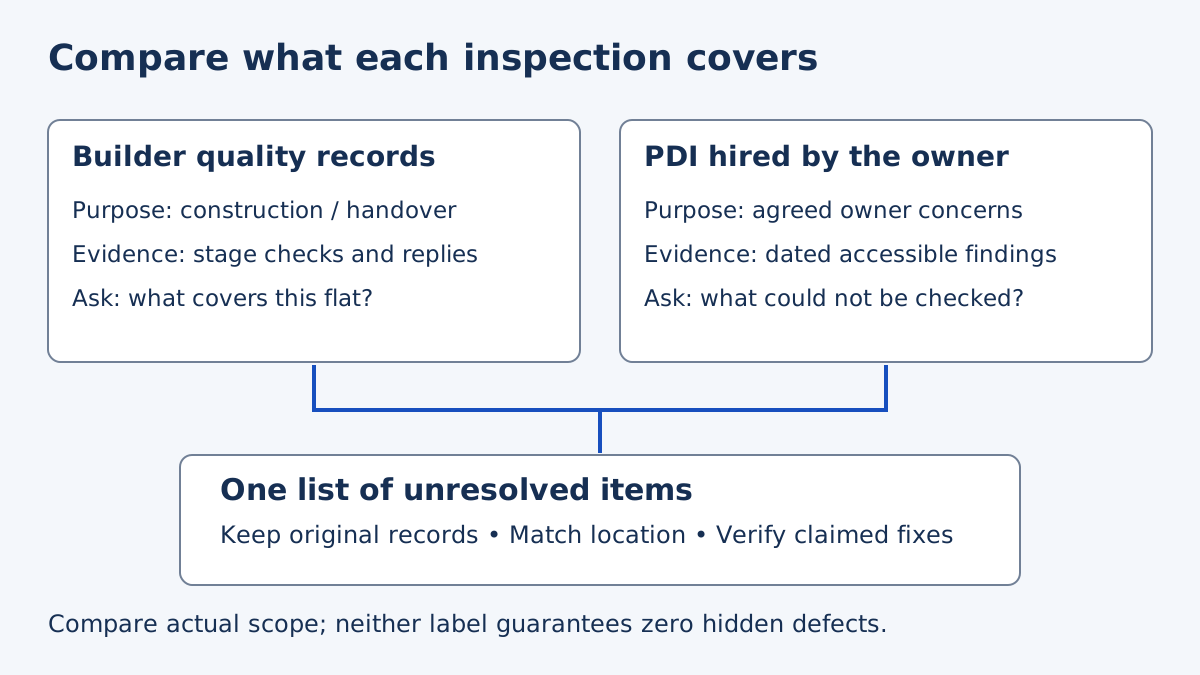
A builder quality check and an independent pre-delivery inspection can complement each other. Before deciding whether either covers your needs, check what each team will inspect, when they will do it, who receives the report and what remains unresolved. A builder's completed checklist is useful evidence; a separate PDI gives you another documented assessment of the accessible flat. Neither label alone guarantees that hidden defects have been ruled out.

What question does each check answer?
Ask the builder what its quality-control process covers. The team may check work during construction, get each trade to sign off its work and prepare the flat for handover. Request the records you can receive, and check which ones relate to your flat. Look for the dates and any items still awaiting attention.
Construction-stage checks can examine work before finishes conceal it. For example, the UK warranty body NHBC describes inspections at several construction stages, including pre-plaster and pre-handover. Earlier records may cover work you cannot see at handover. NHBC's example concerns the UK; you still need to ask how your Delhi NCR builder checked your project.
In an owner-commissioned PDI, you hire a separate inspector to examine the flat before handover. The inspector records what they can observe and check during the agreed visit. You can then discuss specific concerns with the builder, using a list that identifies each location. Ask how the inspector will work and report findings, what access they need and what the agreement covers. The word "independent" alone does not answer those questions.
How should you compare the two scopes?
Use the same questions for both teams. Request enough detail to compare the checks. Two teams may use the same name for visits that cover different things.
| Question | Ask the builder's quality team | Ask the independent inspector |
|---|---|---|
| Purpose | Which construction or handover stage does this cover? | Which owner concerns will this visit address? |
| Coverage | Which rooms, trades and records were checked? | Which rooms, components and methods are included? |
| Conditions | Were water, electricity and access available? | How will unavailable checks be identified? |
| Evidence | Can flat-specific findings and closure records be shared? | What photographs, locations and explanations will I receive? |
| Follow-up | Who handles each outstanding item? | Is clarification or a later verification visit included? |
| Limits | What was outside this check? | What needs a specialist or another visit? |
InterNACHI's buyer guidance recommends discussing the inspection scope beforehand and receiving written findings. Use that advice when booking, and confirm the particular provider's inclusions in your agreement.
For a room-by-room starting point, use the flat possession checklist. Then ask which entries your proposed service covers. A published checklist is not your inspection contract.
What makes a separate report useful?
Look for a finding you could locate without its author standing beside you. "Bedroom window needs attention" leaves too much interpretation. A useful entry identifies the bedroom, the particular window, the observed problem and the next action requested. A contextual photo and close-up help connect the words to the component.
Ask to see how the report handles a finding that cannot be resolved during the visit. The inspector should distinguish defects they observed from concerns that need investigation. They should also identify items they could not test. Page count and the number of photographs do not establish completeness.
Before commissioning, confirm these practical details:
- Who receives the report, and in what usable format?
- Are locations and findings identified consistently?
- Are blocked areas and unavailable tests recorded alongside the affected items?
- Can you ask questions after reading it?
- How will the builder's response be attached to the original finding?
- What evidence would be needed to verify a claimed repair?
These are proposed buying questions, not a promise that every inspection package includes each feature.
How should you use the builder's records?
You can commission a separate inspection without disputing the builder's findings. Give the inspector relevant builder records and your concerns so the visit can focus on what remains uncertain. If two findings differ, compare the dates, location, method and operating conditions before assuming someone is wrong.
For example, a door that worked during an earlier check may rub later, while a reported plumbing issue may already have been repaired. Keep both records and ask what changed before drawing conclusions about negligence.
Ask providers about their qualifications, any business relationships that could affect their assessment and who decides what goes into the report. InterNACHI's ethics code provides one professional body's approach to impartiality and written service terms. Membership rules apply to its members; citing them does not claim that Ezeetask or a builder holds that membership.
What remains outside a handover inspection?
An inspector who examines accessible parts of the flat cannot see every concealed junction or predict every future leak. A dry-day visit also cannot reproduce every weather condition. To assess structural adequacy or compliance with building codes, you need the appropriate professional assessment and documents. A snag report, which lists inspection findings, does not certify either.
If you need a specific question answered, such as whether a reported crack requires structural investigation, state it before booking. Ask who is competent to answer it and whether referral is needed. More instruments do not remove those limits on their own.
In a Delhi NCR apartment, also separate your flat from shared shafts, external façades and building services. Confirm who can grant access to those areas and who will handle follow-up. Agree any wider assessment; a visit to your flat does not cover the entire tower by default.
What should happen after the comparison?
Keep the original reports intact and create one list of items that still need attention. Match duplicate observations by location, record the builder's response and distinguish "repair reported" from "repair checked". If a photograph only shows fresh paint, it may answer a finish question but leave the underlying concern unresolved.
For a new-flat handover, discuss the scope of pre-delivery inspection. For a wider condition concern, use home inspection to explain what you need assessed. Share the existing checklist and the specific gaps you want the visit to address.
Frequently asked questions
Does builder QC replace my own inspection?
It may answer some of your questions. Compare its documented coverage with your concerns and the proposed PDI scope before deciding what further assessment would add.
Can either report guarantee a defect-free flat?
No inspection label establishes that. Read the stated limits and distinguish a dated observation from a promise about hidden conditions or future performance.
Should I send the entire report to every contractor?
Ask the provider who may receive the report and who may use it to make their own decisions under its contract. Share relevant findings with authorised recipients, avoiding unnecessary personal information and unrelated photographs.
Related reading
- Inspect your flat before interiors hide the evidence
- Outstation flat owners: making an inspection useful
Sources and further reading
- InterNACHI: home inspection questions for buyers and sellers: scope and written findings.
- NHBC: construction-stage inspections: UK example of checks before handover.
- InterNACHI: code of ethics: member impartiality, disclosure and written terms.
These are professional reference sources, not Indian legal requirements or confirmation of Ezeetask's service package.