seepage · 7 min read
Moisture meter readings on walls: how to read them
Learn what wall moisture meter readings can and cannot show, how material and scale affect results, and what to ask before repairs or repainting.
To understand a wall moisture reading, you need to know the meter's scale, the wall material and what the inspector compared it with. A number on plaster may not be a percentage of water in the wall. It can help the inspector choose where to investigate next, but one reading cannot identify a leaking pipe or prove that a repair has worked.
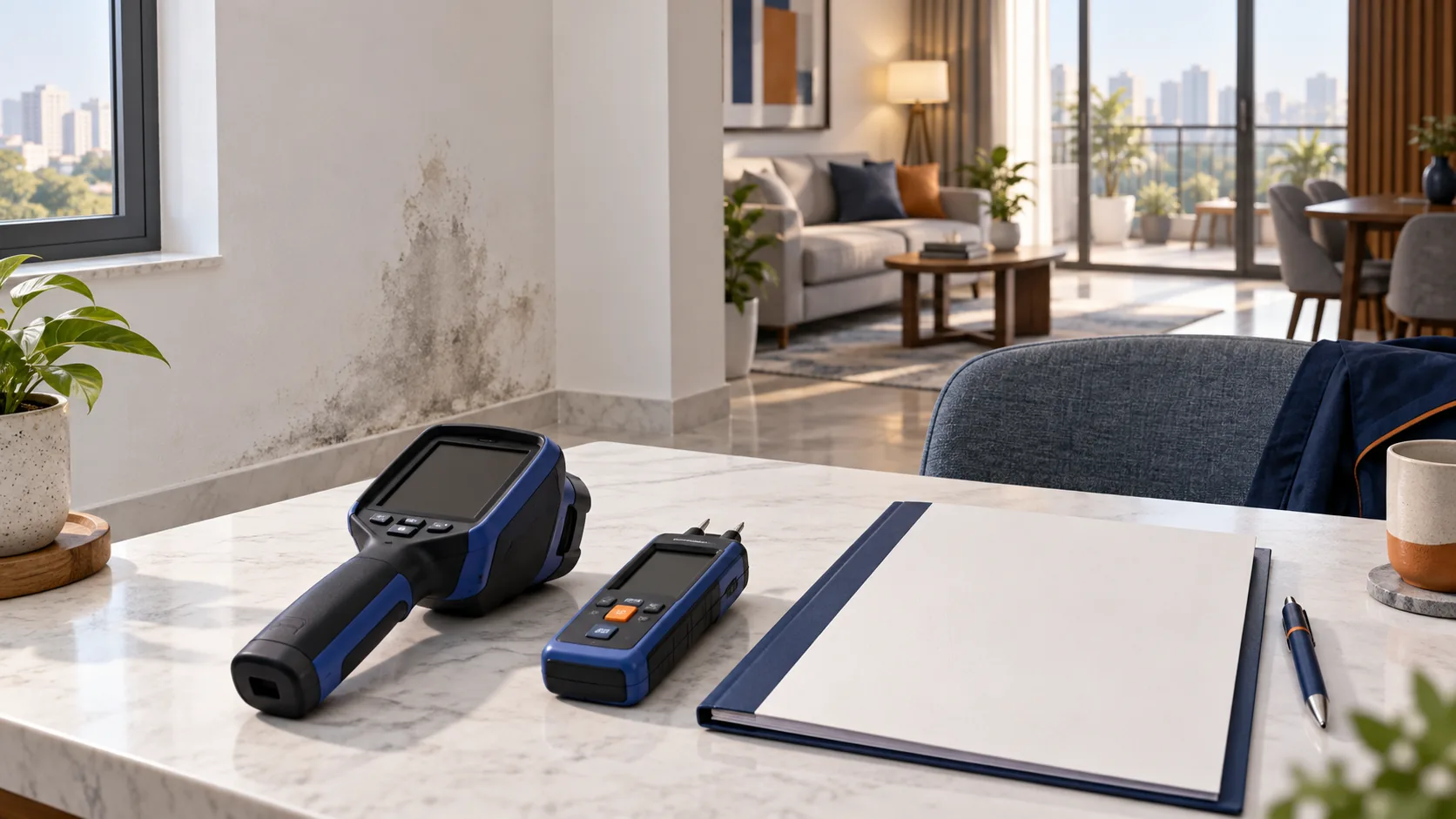
Is the displayed number a water percentage?
Ask which mode the operator used. A meter may show a wood moisture percentage, a wood moisture equivalent reading for another material, or a relative search scale used to compare readings. Each scale has a different meaning. Wood moisture equivalent, or WME, expresses the reading against a wood-based reference. A WME number on plaster does not mean that percentage of the plaster's weight is water. Protimeter's explanation of its scales describes this distinction for its instruments.
A photograph showing only the number leaves you without the details needed to interpret it. Ask for the model, selected mode, unit or scale, surface material and measurement location. If the record says only "wall moisture: high", ask what the comparison was and what the operator concluded from it.
You cannot use a single percentage here to declare plaster, brick, concrete and tiled walls dry. Ask the operator to follow the meter's instructions and explain what decision the reading supports. Checking a stain for possible moisture is different from deciding whether the surface beneath a new finish is ready.
Why compare similar material in the same home?
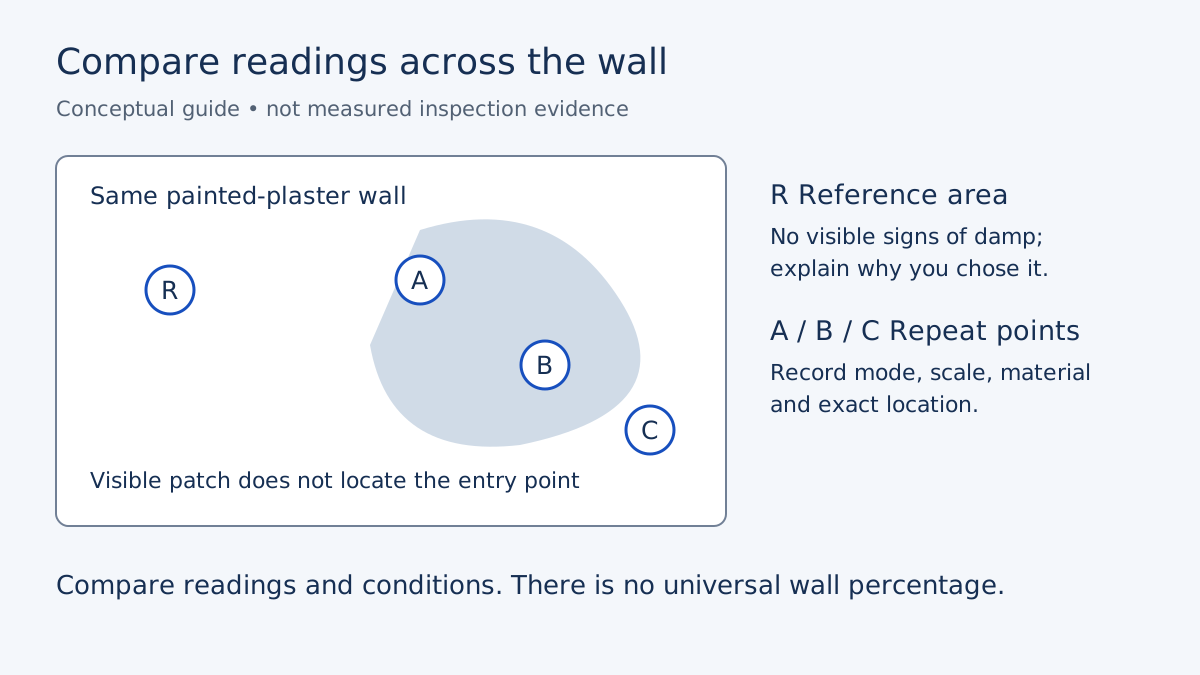
For a painted plaster wall, the inspector can compare the reading with an area that appears unaffected and has similar plaster and paint. This usually gives a more useful starting point than comparing it with a wooden door or a tiled bathroom wall. Calling it a reference area means using it for comparison; it does not mean a laboratory has certified it dry.
Ask why the inspector chose that spot. A repaired patch may contain a different material, and the wall across the room may have different layers. If the inspector cannot reach a suitable reference area, the report should say so beside the reading.
Use this table to keep comparable records. It does not set limits for passing or failing a wall:
| Record | What it lets you compare |
|---|---|
| Named wall and repeatable point | The same location on a later visit |
| Surface and finish | Whether unlike materials are being compared |
| Instrument, mode and scale | Whether readings have the same meaning |
| Reference location and reason | What "higher" is higher than |
| Recent rain, use or repair | Conditions that may differ between visits |
| Interpretation and uncertainty | What the reading supports and leaves open |
What can make a high reading misleading?
The material in the wall can affect the reading. Protimeter's application notes explain that salts and conductive constituents can influence electrical moisture readings. Its FAQ also warns that hidden metal can affect non-invasive readings. The operator should explain a high result in light of the meter and the wall construction, rather than dismissing it because metal or salts might be present.
If readings change sharply at a corner, ask how the corner's construction might affect them. For a reading taken over tile, the report should name the finish. The operator has not measured the concealed pipe directly. Do not ask someone to drill into the wall to make a reading seem more convincing. Before any work that opens the surface, agree its purpose, obtain permission and have a professional assess hidden pipes and wiring.
Ask the inspector: "Could anything else explain this reading, and how did you check that possibility?" The answer will help you understand the result better than a comparison of which brand shows the largest number.
How should readings be recorded over time?
Keep the same location labels and retain the earlier record. "Bedroom, window-side wall, point B" is easier to revisit than "damp area". Include an overview photograph that lets another person find the point and a closer image when useful. Avoid photographing personal papers or neighbours' interiors unnecessarily.
Protimeter's user guidance recommends mapping measurements across the suspect area and recording readings. For your own record, add the visit date, recent work and any change in ordinary room use. These notes help you keep track of the conditions. The operator still needs to follow the meter's procedure.
If a later reading is lower, ask whether the same equipment, mode, material and point were used. If the conditions changed, a lower number alone does not prove that the repair caused the improvement. New paint may also make the original patch boundary harder to find. Keep the earlier photographs before decorating.
Can a meter tell where water entered?
The meter gives a reading for the area tested. To identify where water entered, the inspector needs to connect the pattern with the construction, the leak's history and suitable professional checks. The report should make clear whether the inspector found a higher reading or confirmed a source.
Thermal imaging supplies different information. Read what thermal imaging can and cannot prove before treating a coloured image and a meter photograph as two independent proofs of the same leak. Ask what each observation adds to the investigation.
In a Delhi NCR apartment, the possible source area may be in a neighbouring flat or common shaft. Measuring a wall the inspector can reach does not establish what happened in an area they could not enter. Arrange permissions through the appropriate resident or building team; record refused or unavailable access.
What should you ask before booking?
Ask which methods are proposed for your concern, why they suit the material, what access is needed and how limitations will be reported. This is a guide to moisture meter methods. Confirm which meter or test, if any, your agreed Ezeetask visit includes.
Use the water leakage detection service page to discuss the investigation scope, and the seepage inspection report guide to judge the evidence you want recorded. Share the symptom and its history when discussing a booking. A number from another visit needs that context.
Frequently asked questions
Does a red indicator prove that a pipe is leaking?
No. The indicator's meaning depends on the mode and the material tested. It cannot identify a pipe defect by itself.
Can readings through different finishes be compared directly?
Do not assume so. Ask whether the instrument supports that comparison and what limitations the finish introduces.
Can a reading approve repainting?
A reading alone cannot approve repainting in all materials and conditions. Ask the person specifying the finish what condition the surface underneath must meet and how they will check it.
Related reading
If you have a visible damp patch, the wall seepage guide helps you record the symptom before discussing investigation or repair.
Sources and further reading
- Protimeter moisture meter FAQ: manufacturer-specific scales, hidden metal and measurement limitations.
- Protimeter application notes: material differences and salts; not a universal wall threshold.
- Protimeter user guidance: mapping and recording readings; follow the actual model's instructions.