seepage · 7 min read
Damp walls near the skirting: is it rising damp?
A damp wall near the skirting is not proof of rising damp. Compare ground moisture, wet areas and service leaks before choosing a treatment for your home.
A damp wall near the skirting alone cannot confirm rising damp. Moisture could come from the ground if the wall connects to damp ground. Nearby wet areas, hidden pipes and rain entry can also leave marks near the floor. Before paying for a damp-proof treatment, ask the inspector what evidence supports the proposed source.
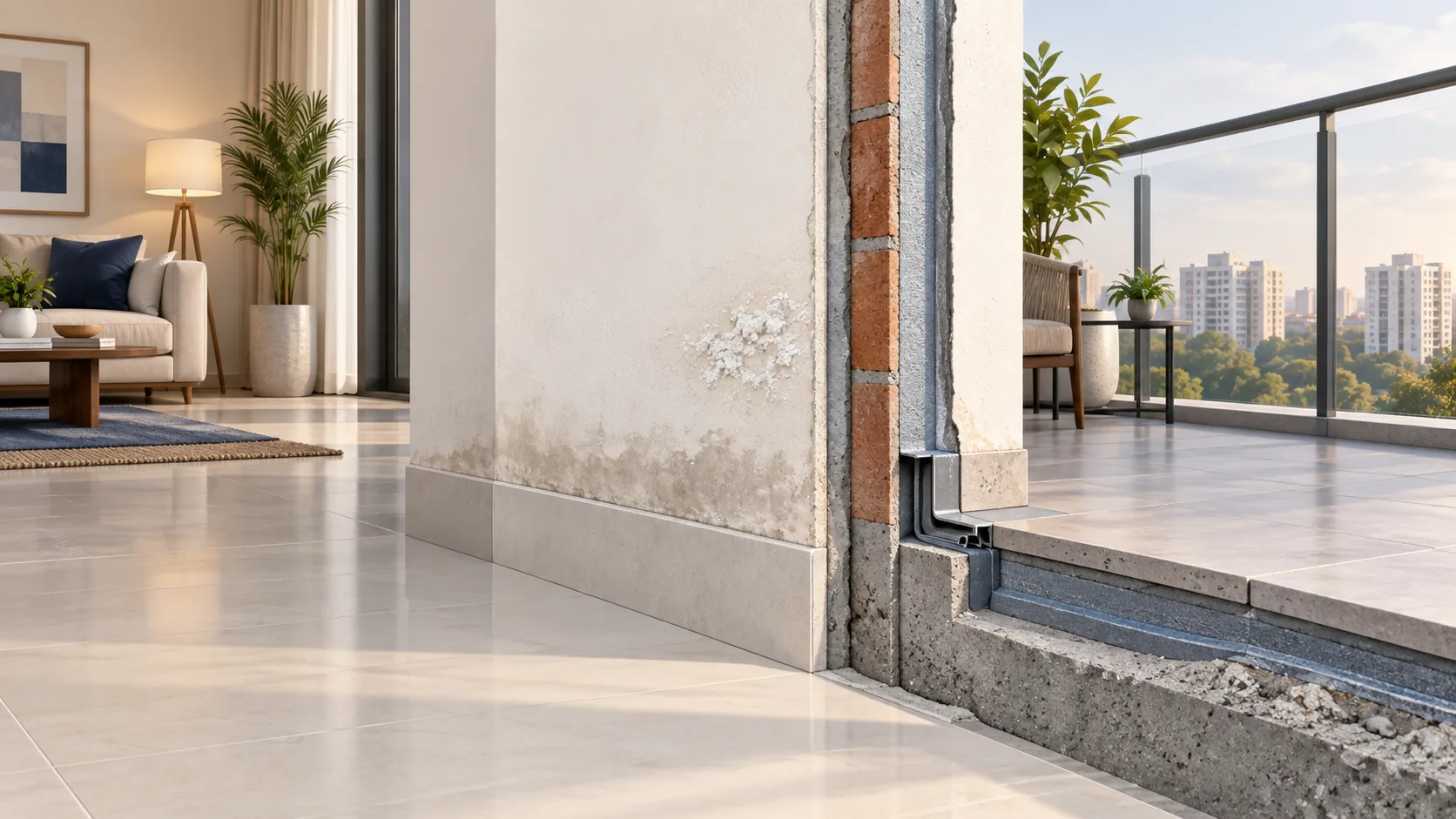
What does rising damp mean?
Rising damp is water moving up from the ground through porous building material. This is called capillary movement: water travels through small connected spaces in the material, even against gravity. WBDG's moisture-management concepts describe this behaviour in foundations that contact wet soil.
Ask where the water starts. You can see that a patch is low on the wall, but the inspector needs evidence from the building's layout and condition to show that the moisture comes from the ground.
For the broader vocabulary, see the difference between seepage, leakage and dampness. Use those terms to describe what you can see while the inspector investigates the source and route.
Why does the floor level change the investigation?
In a ground-floor room, the inspector may need to consider nearby soil or paving, external drainage and the relationship between the wall and floor. In an upper-floor flat, ask what water source could reach that floor and wall. A low patch there does not establish a continuous route from the ground.
Water from a bathroom, balcony or pipe may reach porous material at floor level and then spread. Building Science Corporation's diagnostic guidance explains that capillary movement can be sideways as well as upwards. A patch that seems to spread upwards cannot identify groundwater as the source by its shape alone.
If a contractor proposes a treatment for ground moisture, ask how they considered an adjacent wet area or pipe leak. Use that explanation to compare quotes. The floor level alone cannot establish either a plumbing problem or rising damp.
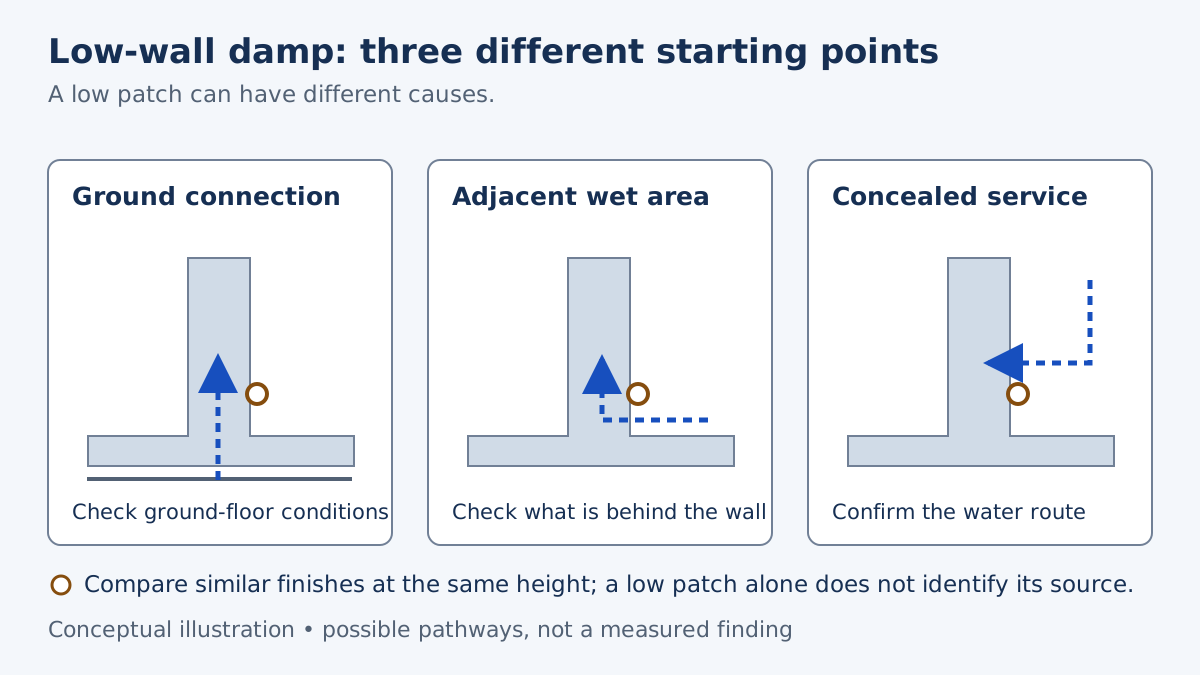
Which observations help separate the possibilities?
Record what is near the mark as well as its size. The following comparisons can help an inspector decide where to look, but cannot establish a diagnosis on their own.
| What you can describe | Question it helps ask |
|---|---|
| The other side of the wall is a bathroom | Could a wet-area or service route reach this wall? |
| The mark follows an external wall after rain | Which exposed junctions and drainage paths should be inspected? |
| Similar patches appear on several ground-floor walls | What ground, floor or external conditions do those walls share? |
| One small area changed after plumbing work | Which alteration and nearby connections need checking? |
| A patch is behind a fixed wardrobe | What remains hidden, and how can access be arranged safely? |
| The visible border changes while the room is unused | What water sources remain active, and what earlier moisture may remain? |
Give the inspector a simple floor sketch alongside your photos of the Delhi NCR apartment. Mark the affected wall, the nearest bathroom, balcony and shaft. Label the room and side of the wall. Mark pipe routes "unknown" unless drawings or an inspection establish them.
Can a moisture meter prove rising damp?
A moisture meter reading alone cannot identify the source. The inspector needs to consider the instrument, the material they are measuring and its surface condition. Salts can affect electrical resistance readings, so a high reading does not prove that fresh water is entering from the ground.
The joint RICS, Historic England and PCA statement describes instrument limits and the effects of salts. The authors focus on traditional buildings. Their cautions about diagnosis can help inform an inspection, but their heritage context and repair choices are not Indian apartment standards.
Ask the inspector where they took readings, what they compared and what other evidence supports their conclusion. They can compare accessible points with similar finishes to interpret the pattern. Readings on different materials may mean different things. A thermal image also needs context before anyone can use it to identify a water source.
What should you do before new skirting or cupboards?
Preserve the evidence while access is easy. Before an interior contractor covers the wall, take a wide photograph and close-up, record the date and save any earlier repair information. Explain the concern before cabinetry or new panelling makes the affected area inaccessible.
Before the visit:
- Identify whether this is a ground-floor, basement or upper-floor wall.
- Note when you first saw the patch and whether it is changing.
- Record ordinary rain and nearby water-use timing without creating test conditions.
- Keep photographs of both sides where accessible and permitted.
- List earlier painting, plaster, skirting or plumbing work.
- Arrange relevant neighbour or society access before the appointment.
- Ask the inspector to record inaccessible areas and any follow-up needed.
Do not drill into the wall, remove electrical points or wet the adjacent bathroom to test a theory. Leave any opening up or controlled checks of services to appropriate professionals, who need to plan the work.
How should you judge a treatment recommendation?
Ask the contractor to explain the suspected source and the evidence for it. If they are uncertain, they should tell you what to check next. Ask which finding the proposed treatment addresses. Does the recommendation concern a pipe, a wet-area detail, outside drainage or moisture at the base of the building?
The same joint moisture-investigation statement recommends addressing causes and reassessing after appropriate drying or monitoring. You can use that approach to address an established defect and check the result before adding other treatments. It does not set one drying period or coating for all walls.
Agree the investigation before choosing a decorative finish. Ask when the inspector or contractor will reassess the wall and who will decide whether it is ready for the chosen finish. A dry-looking surface alone cannot confirm that hidden parts are dry.
Common questions
Is a horizontal tide mark proof of rising damp?
No. Photograph it and record its height and changes, but ask for evidence of the source and route before accepting the diagnosis. The appearance alone cannot exclude other low-level wetting.
Should I request a chemical damp-proof course immediately?
Request a diagnosis first. Before choosing a treatment for ground moisture, the contractor needs to establish that source and check whether the treatment suits the construction. Ask for that explanation alongside the product name.
What should I send before an inspection?
Send labelled photos, the floor level, the room layout and a brief timing history. The wall-seepage guide helps describe the concern. For a recurring patch, discuss these details with Ezeetask's leakage and seepage service before replacing finishes or covering the wall.
Related reading
- White powder on walls: efflorescence and moisture
- Moisture meter readings on walls: how to read them
Sources and further reading
- WBDG: Moisture Management Concepts: capillarity and material behaviour; not a diagnosis of a particular wall.
- Building Science Corporation: Investigating and Diagnosing Moisture Problems: water movement and alternative pathways; construction examples are not local specifications.
- RICS, Historic England and PCA: Investigation of moisture: September 2022 guidance on diagnosis, measurement limits and proportionate follow-up.