seepage · 7 min read
Acoustic leak detection: uses and limits in homes
Learn how acoustic leak detection uses sound, why pipe material and background noise matter, and what evidence to ask for before opening a wall.
Acoustic leak detection means listening for sound or vibration from escaping water to narrow down where a leak may be. It can help with a leaking supply pipe carrying water under pressure. The operator still needs to interpret the sound, taking account of the pipe material, conditions, access and background noise. Hearing nothing does not rule out leakage in the home.
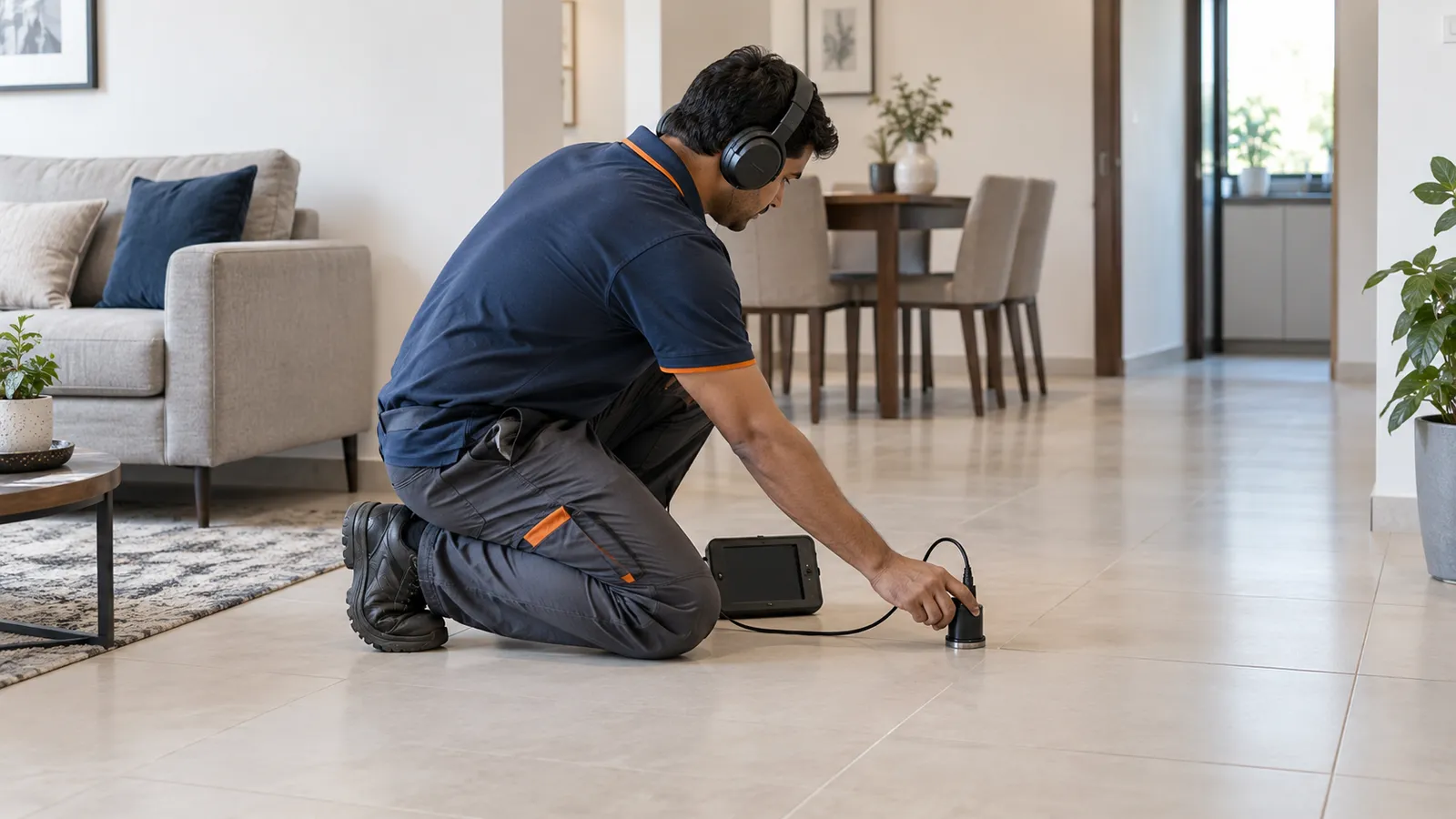
This article explains the method so you can assess an inspection proposal. Confirm the methods available and the agreed scope when booking an Ezeetask visit. This guide does not establish that the visit includes acoustic equipment.
What does an acoustic detector hear?
Fluid escaping from a pipe under pressure can create noise and vibration. Sensors can pick up those signals through the pipe or its surroundings. Research by Giro and colleagues examined pressure and vibration signals generated by controlled leaks. The researchers used an industrial pipeline. Their results do not establish how well the method will work on a bathroom pipe.
The operator places a contact sensor or microphone at accessible points and compares the sounds or readings. Sewerin's water leak detection brochure describes microphones, frequency filtering and comparison of recorded sounds. These tools help the operator measure and compare sounds; they cannot show a picture through the wall.
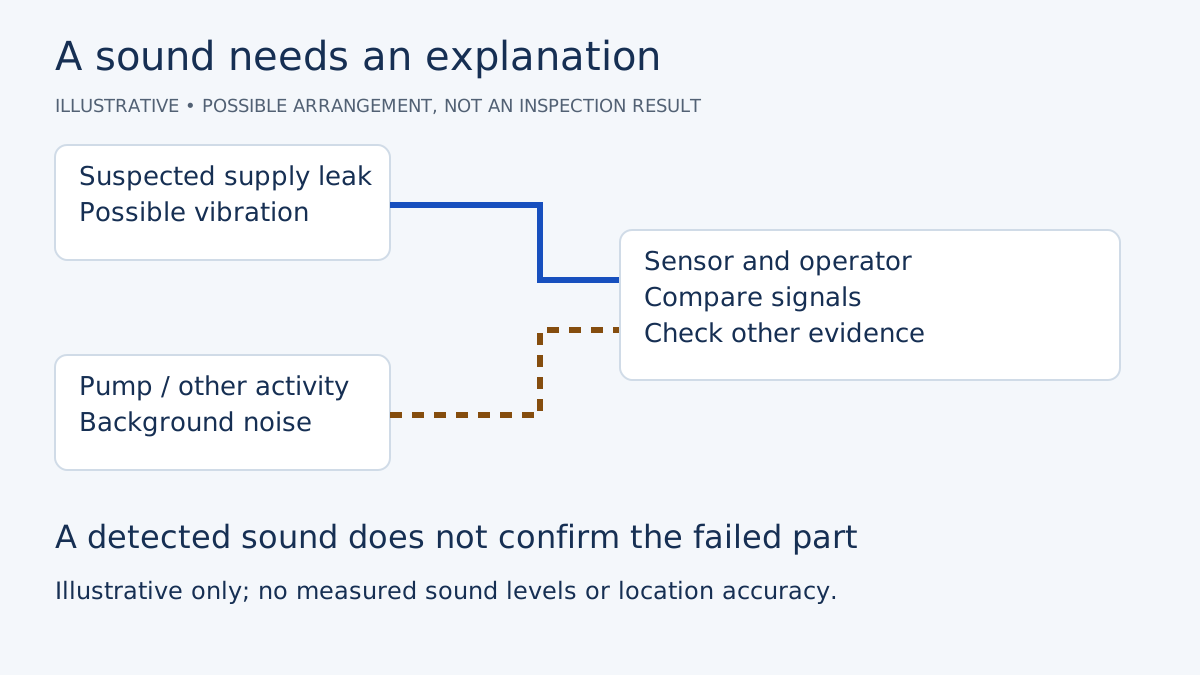
Ask the operator whether the sound fits a suspected supply leak and how they separated it from other activity. You need more explanation than "the device made a noise" before agreeing to open a finished surface.
Why do pipe material and background noise matter?
The operator needs to choose sensor positions and interpret sounds for the pipework in your home. Metal and plastic pipes differ. Plastic pipework may still suit acoustic investigation, but a result from another material cannot be assumed to apply to it unchanged.
A study of vibration sensing on ABS plastic pipe investigated sensor spacing and water pressure and filtered interference from motors, pumps and valves. The researchers examined how these conditions affected measurements in their setup. Their experiment does not prove that a commercial detector will locate every leak in plastic pipework.
For an apartment visit, give the inspector practical context: whether a booster pump was operating, whether plumbing work was underway nearby, and whether the suspected symptom occurs only at particular times. Do not turn off common equipment or alter pressure yourself. The professional must decide whether they can make a useful check under those conditions.
When can listening for a leak help?
Listening is most relevant if the professional suspects a water line under pressure and can obtain a usable signal. Manufacturer product ranges distinguish acoustic instruments from tools intended for noiseless or unpressurised situations; see Sewerin's water detection range. Ask which type suits the suspected source and conditions, even if someone recommends a device as the newest available.
| Question about the site | What it changes |
|---|---|
| Is a supply pipe suspected? | Establishes whether listening targets a plausible source |
| Is the problem occurring during the visit? | An absent event limits what can be inferred |
| Are suitable contact positions accessible? | Determines whether the planned comparison can be made |
| Is the pipe route or material uncertain? | Leaves assumptions that should be recorded |
| Are pumps or other water users active? | Gives context for sounds that may have another explanation |
| Is the concern instead rain entry or wet-area seepage? | May require a different investigation rather than more listening |
Treat this table as questions for the visit, not a procedure for operating an acoustic detector. A homeowner's role is to provide the history and arrange authorised access.
Does the loudest point prove where to break the wall?
Do not authorise an opening solely because someone has marked the loudest point. Ask how the proposed location relates to the pipe route, whether they obtained the same observation again, and what other evidence supports it. The operator may have narrowed the search without confirming which component has failed.
Ask the operator to record what they heard, how they interpreted it and what they propose next. They can name a suspected pipe section while explaining that they still need to confirm the fault. The report should explain their confidence in the location and any access limits, so you can judge the proposed opening.
Before an opening, agree who will arrange access, how its extent is decided, and who handles reinstatement. In a flat, also establish whether the suspected section is inside the home or connected to common pipework. Ask for these arrangements alongside the explanation of the instrument readings.
How does acoustic evidence compare with other checks?
A flow monitor measures water-use behaviour; a local moisture sensor detects water at its location. EPA's flow monitoring guidance explains that distinction. These observations can help the investigation, though each checks something different from listening along a suspected pipe.
Thermal images are another kind of evidence. They need their own interpretation, as explained in what thermal imaging can and cannot prove. A professional may recommend more than one check because the questions differ: is water being lost, where is damp visible, and which source best explains both?
If the proposal moves straight from a damp wall to a waterproofing product, read why inspection should come before waterproofing. Ask how each proposed method will check a possible cause, rather than judging the investigation by the number of instrument images.
What should you confirm before booking?
Describe the affected room, timing and recent repairs when discussing water leakage detection. Ask what the initial visit includes, what could prevent a useful result, and whether any further specialist method would require a separate arrangement. Keep photographs of the visible symptom, without presenting them as proof of the source.
For a bathroom leakage concern, note whether it follows use or continues when the bathroom is unused. If several sources remain possible, discuss the broader seepage inspection scope. Do not choose the repair before the evidence has narrowed the cause.
Frequently asked questions
Does acoustic detection work without pressure?
It relies on a detectable signal associated with the leak. A noiseless or unpressurised situation may require another method. Do not increase pressure yourself to make a suspected leak audible.
Can a quiet test rule out waterproofing failure?
No. A listening result from a supply pipe does not establish the condition of a bathroom's waterproofing or rain-entry details.
Is an exact location guaranteed?
No universal accuracy or success rate applies to every home. Ask for the basis of the proposed location and what remains unverified before agreeing to an opening.
Related reading
Sources and further reading
- Sewerin: Water leak detection brochure, manufacturer descriptions of acoustic sensors and filtering.
- Sewerin: Water detection product range, distinctions between detection methods.
- Awang Lah and colleagues: Leakage localisation using vibration sensors, 2019 experimental ABS-pipe study.
- Giro and colleagues: Jet noise characterisation, 2022 industrial-pipeline research; not a domestic accuracy benchmark.
- EPA: Leak Detection and Flow Monitoring Devices, complementary observation types.