seepage · 7 min read
Water meter running with taps closed: what next?
Understand what a moving water meter can mean, how tanks and shared supplies affect the reading, and what to record before a leak inspection.
If your water meter moves with the taps closed, water may still be passing through the supply it measures. Before assuming a hidden pipe leak, check which homes and equipment the meter serves. A toilet cistern, storage tank or automatic appliance may be filling. You should investigate movement you cannot explain, but the reading alone cannot tell you where to open a wall.
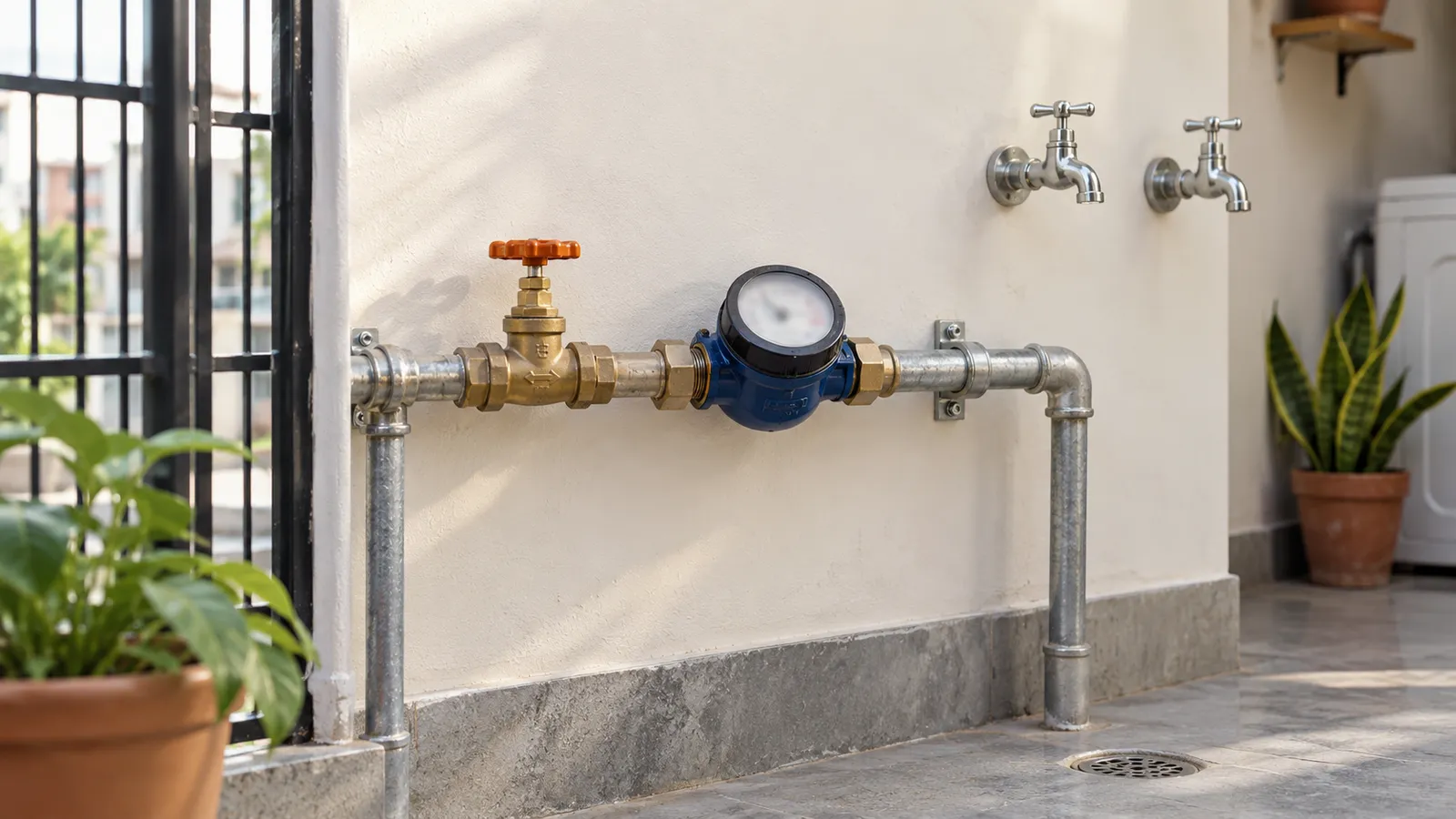
Why can the meter move when nobody is using a tap?
Closed taps do not account for all water use. The toilet cistern may be refilling, a washing machine may be drawing water during its cycle, or a storage tank may be replacing water used earlier. Check whether a dishwasher, irrigation timer or water treatment device is drawing water too.
A running toilet is worth considering even if the bathroom floor is dry. Water can escape from the cistern into the bowl and leave through the drain. EPA's household leak guidance identifies worn toilet seals and other leaking valves as common sources. Ask the plumber to check the toilet as part of the visit. The guidance alone cannot tell you whether its seal is faulty.
Write down what was operating when you noticed the reading. "All taps closed, washing machine running" and "no known water use" describe different circumstances. Keep that distinction in the message you send a plumber.
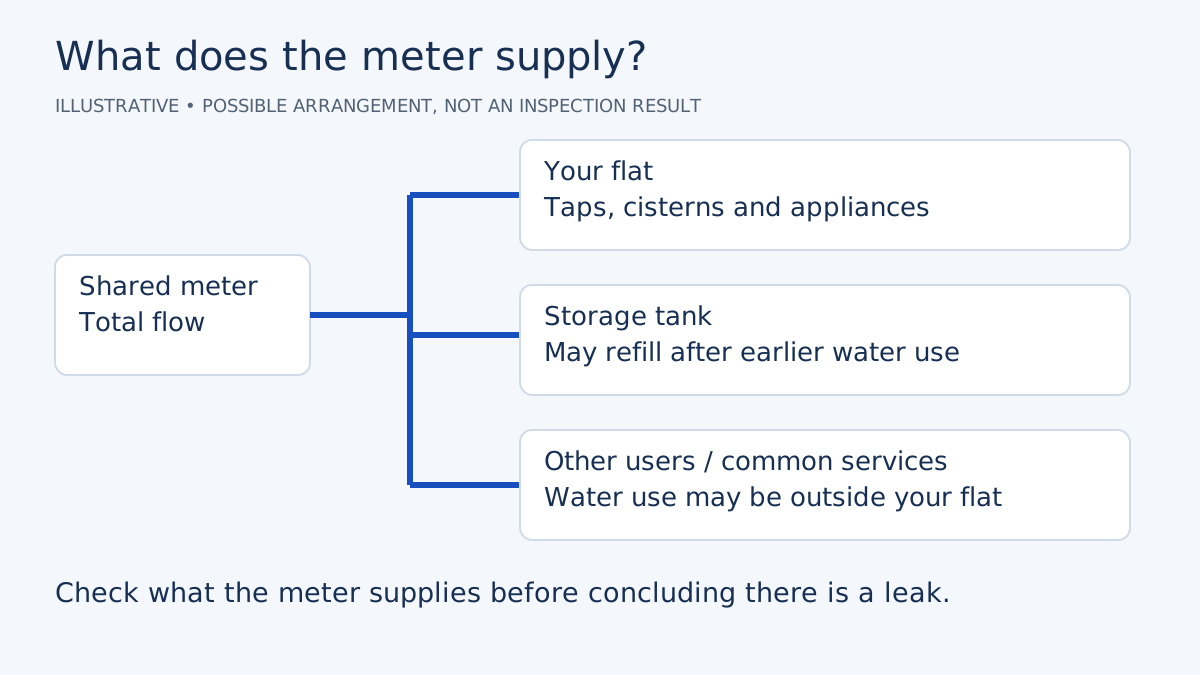
Does this meter measure only your flat?
Ask the society maintenance team or water supplier to confirm which meter is yours and which homes or equipment it supplies. A label on a cupboard is useful, but an old or unclear label is not enough to settle the plumbing layout. Thames Water's meter guidance recommends matching the serial number with the bill; in an apartment, the society may keep the equivalent record.
If a meter supplies several homes or a shared tank, other users can explain its movement. If it measures water entering a tank upstream of your flat, its timing can differ from when you use water. Ask maintenance to explain how the supply is connected before you draw a conclusion about your flat.
Do not operate society valves, enter a shaft or lift a heavy meter cover to investigate. If the meter is not safely visible, ask maintenance to photograph it and record the reading.
What can you safely record before booking a visit?
Use observations from ordinary, accessible areas. You do not need to dismantle a cistern or disconnect an appliance.
| Record | Why it helps |
|---|---|
| Meter photograph and time | Lets maintenance identify the device and read the same display |
| A later reading and elapsed time | Shows whether the cumulative reading changed during that interval |
| Fixtures and appliances in use | Separates known consumption from unexplained movement |
| Tank refill or pump timing, if known | Helps explain delayed consumption without guessing |
| Drips, continuous WC sounds or visible overflow | Gives the plumber a specific fixture to examine |
| Location and timing of damp patches | Helps assess whether there may be a separate building moisture problem |
EPA suggests comparing meter readings over a period without water use. It gives two hours as a household screening example; it does not set a universal leak-detection standard. With a shared supply or storage tank, you may be unable to confirm that no one used water during that time. Record those circumstances so the plumber can interpret the readings.
If a display is unfamiliar, photograph it and ask the supplier how to read it. Before calculating a leakage volume from the indicator's movement, confirm the display units and the meter instructions.
How should you interpret the result?
If you have confirmed that the meter serves only your supply and cannot explain the change in its reading, arrange a plumbing investigation. The plumber may find the cause at an accessible fixture, a tank component or hidden pipework. Share the readings and observations before requesting replacement of a concealed pipe.
An unchanged reading tells you only about that meter during that interval. Other sources of dampness remain possible. A drain that leaks during use, rainfall entering a building, or a problem on another supply may not register as continuous flow through your meter. An intermittent event may also be absent during the observation.
For context on ordinary fixture faults, see common plumbing problems in Delhi NCR homes. If you mainly see damp near a bathroom or another wet area, the bathroom leakage guide helps you describe where the damp appears and whether it follows use, alongside the meter reading.
Would a smart flow monitor answer the question?
A flow monitor can flag unusual water use. A moisture sensor can alert you to water at the spot where you place it. EPA's device guide distinguishes these technologies. An alert or water-use graph alone cannot identify a failed fitting behind a tile.
Before buying a device, ask whether it suits the supply arrangement and who can install and maintain it. In a shared supply, coordinate with maintenance rather than assuming a device fitted near your door measures only your home. Existing readings and a clear symptom history may be enough to plan the first visit.
What should you ask the inspection team?
Send the meter observations with the damp location, recent plumbing work and any access restrictions. Ask which supply or fixtures can be checked, whether society involvement is needed, and how untested areas will be recorded. For Delhi NCR apartments, arrange access to the relevant maintenance representative before the appointment if the supply layout is uncertain.
Ask the team to explain the observations in writing and recommend the next check based on what they found. Discuss water leakage detection when the source remains concealed or unclear. The wider seepage inspection service is relevant when the dampness may have more than one possible source.
Frequently asked questions
Is a higher bill proof of a hidden leak?
No. It is a reason to compare readings, billing periods and known use. Ask the supplier about an unexpected bill and a plumber about unexplained consumption; do not infer a wall location from the amount charged.
Should I wait for a damp patch before acting?
No. A fixture can waste water into a drain without wetting a wall. Record persistent unexplained use and arrange a check even when finishes look normal.
Can I turn off a shared valve to see what happens?
Leave shared supply controls to authorised maintenance staff. The investigation must account for other residents and connected equipment.
Related reading
- Pressure tests for concealed pipes: what they prove
- Acoustic leak detection: uses and limits in homes
Sources and further reading
- EPA: Fix a Leak Week, household screening and toilet leakage.
- EPA: Home Maintenance, fixture and appliance water-use checks.
- EPA: Leak Detection and Flow Monitoring Devices, distinction between moisture alerts and flow monitoring.
- Thames Water: Answering water meter questions, identifying the correct meter. UK billing arrangements are not Delhi NCR rules.