seepage · 6 min read
How to compare seepage repair quotes
Compare seepage repair quotes by source, preparation, access, restoration and verification, so missing scope does not hide behind the total price.
To compare seepage repair quotes, first check that they address the same suspected source, location and extent of work. Then compare preparation, repair method, access, reinstatement and verification. Check what each total pays for. One contractor may quote for a cosmetic finish while another includes opening the affected area, repairing it and closing it again.

Do both quotes explain the same problem?
Ask what each contractor found before proposing the repair. "Bedroom seepage" identifies a symptom; it does not identify which part of the building requires repair. Ask the contractor to connect the visible concern to the proposed work, including what remains uncertain.
Request a location-labelled photograph or sketch, the observations supporting the proposed cause, and any inaccessible area that could change the recommendation. If one proposal assumes a bathroom source while another assumes rain entry, ask them to explain the evidence for each cause before comparing prices. Our guide to inspection before waterproofing explains that sequence.
Instrument images need interpretation too. FLIR explains that thermal cameras show temperature patterns rather than seeing water; the inspector needs other evidence to confirm a pattern that looks like moisture. Ask what confirmed the finding. The contractor should use more than a colourful image to choose the repair.
Which details make a quote comparable?
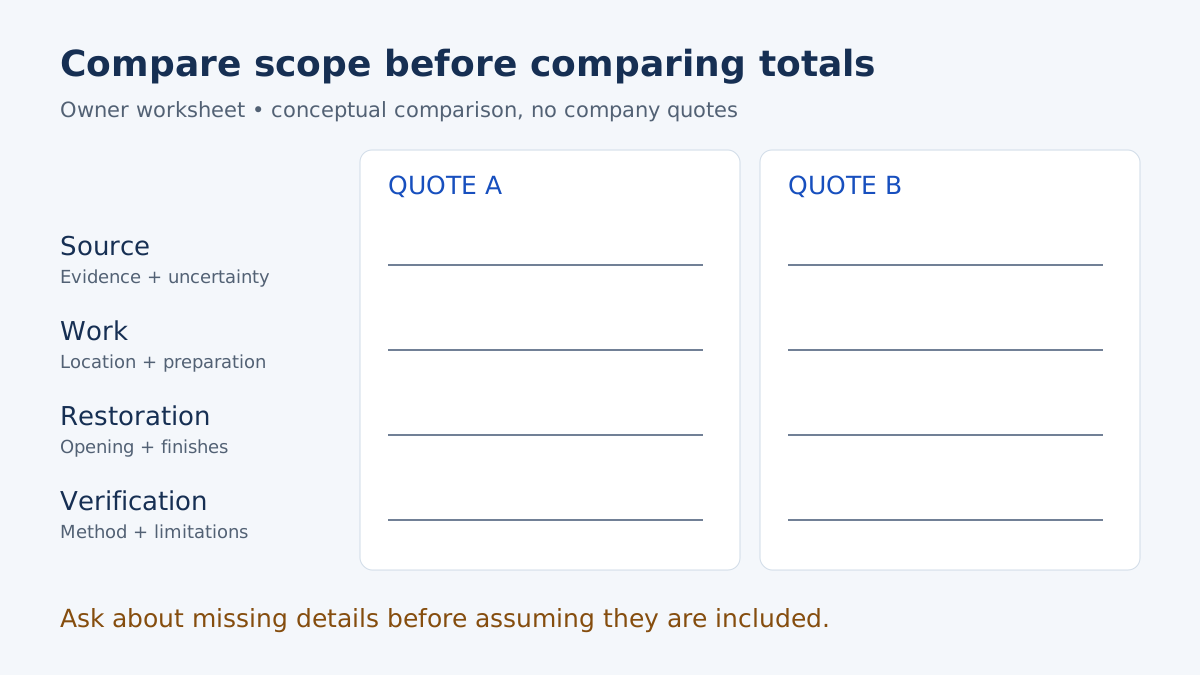
Use the same rows for every proposal. Mark an unanswered item "not stated" instead of assuming it is included.
| Compare this | Ask for this detail | Why the difference matters |
|---|---|---|
| Diagnosis | Identified or suspected source, with limitations | Different causes need different work |
| Location | Room, wall face, joint or treated area | A patch and a whole assembly differ |
| Preparation | Removal, cleaning and substrate repairs | The proposed finish is only part of the job |
| Method | Named system and application scope | Product name alone does not define execution |
| Access | Adjacent flat, shaft, terrace or common area | Permission can control when work happens |
| Reinstatement | Plaster, tiles, paint and debris removal | Restoration may be separately priced |
| Verification | Appropriate check, timing and record | Completion needs more than a final photo |
| Commercial terms | Total, taxes, exclusions and change process | An estimate may change after opening |
This is an owner's comparison worksheet, not a specification for a repair product. EPA's moisture-control guidance covers several building systems and includes verification methods. You can use it to ask how the proposed steps fit together, but it cannot tell you which repair your flat needs.
What preparation and restoration should be written down?
Ask which parts of the job the contractor includes. Does the quote include exposing the repair location, protecting adjacent finishes, disposing of removed material and returning the room to use? For tiles, ask how replacement availability and a possible colour mismatch will be handled. For paint, distinguish a local patch from repainting an entire wall.
A sensible sequence also separates source repair from decorating. EPA's homeowner guidance advises fixing water problems and drying affected surfaces, and warns against painting over mould. Ask how the contractor will check that a surface is ready for finishing. The guidance does not set one drying deadline for all surfaces.
Ask who will check that the surface beneath the finish is ready, and which product requirements and observations they will use. A promise to finish everything on one date should explain any dependence on drying, curing or a follow-up visit. Do not choose a faster schedule because the contractor has left out waiting periods.
How do apartment access and hidden work affect price?
In a Delhi NCR apartment, the work may require an appointment with a neighbour, society access to a shaft, or permission for a common terrace. Agree who arranges each visit and what happens if it is unavailable. Inspection of your room does not establish the condition of an area nobody could enter.
Ask the contractor to write down the limits of any provisional work. If opening reveals a different fault, who records it, who approves the changed scope, and when is the revised amount agreed? Request evidence before the revised work proceeds. You can approve a changed diagnosis when new evidence appears without giving an open-ended instruction to "do whatever is needed".
A quote can also separate investigation from repair. Compare the seepage inspection cost considerations with the repair proposal so you understand which visit, report or additional investigation is included. A single rate cannot reliably tell you the cost without knowing the work involved.
What should count as completion?
Before choosing the contractor, agree what evidence you will receive at completion: the original concern, work recorded at the relevant location, any suitable professional check, and outstanding observations. Agree whether finishing is completed on the repair visit or after a separate readiness check.
A dry-day photograph cannot reproduce every condition under which a rain-related symptom appeared. An old stain does not by itself establish that new water is entering. Ask the contractor to record which work they have finished, which performance checks they have done and what you still need to observe. Do not create your own roof, pressure or flooding test to settle a quote disagreement.
Warranty wording belongs in the comparison too: covered work, start date, exclusions and reporting route. A longer stated duration does not compensate for an undefined area or remedy. Confirm the job-specific terms instead of inferring coverage from a brochure heading.
What are the common questions before choosing?
Should I reject the lowest quote?
No. First ask the lower bidder to fill the missing scope rows. A lower total may reflect a narrower job, different access assumptions or a genuine saving. The written comparison helps you tell these apart without guessing about workmanship.
Is a product brand enough to judge the proposal?
No. Ask how the specified system suits the identified location and substrate, and which preparation and application requirements will be followed. Product selection and the extent of work should be explained together.
What if neither contractor can confirm the cause?
Ask for a staged investigation proposal with clear limits. Extensive repairs may still leave you unsure of the cause if neither contractor has established it.
For a seepage repair discussion, keep both quotes, the finding they rely on and your access constraints together. Use them to ask about missing details before agreeing to work.
Related reading
If you have a visible damp patch, the wall seepage guide helps you record the symptom before discussing investigation or repair.
Sources and further reading
- EPA: moisture-control guidance for building professionals: systems and verification framework; US guidance, not an Indian specification.
- EPA: moisture and the home: source correction and surface preparation limits.
- FLIR: thermal imaging for water leaks: instrument interpretation, not proof of any contractor's capability.